Our Engagement Palette!
Check out our colour-coded system for our weekly space news:
🟤 Brown: For weeks that are mundane and bland.
🟡 Yellow: For fairly interesting weeks.
🟢 Green: For the most exciting weeks.
This Palette will help you decide if this week’s news is worth your time!
This week ranks green 🟢 on the Engagement Palette.
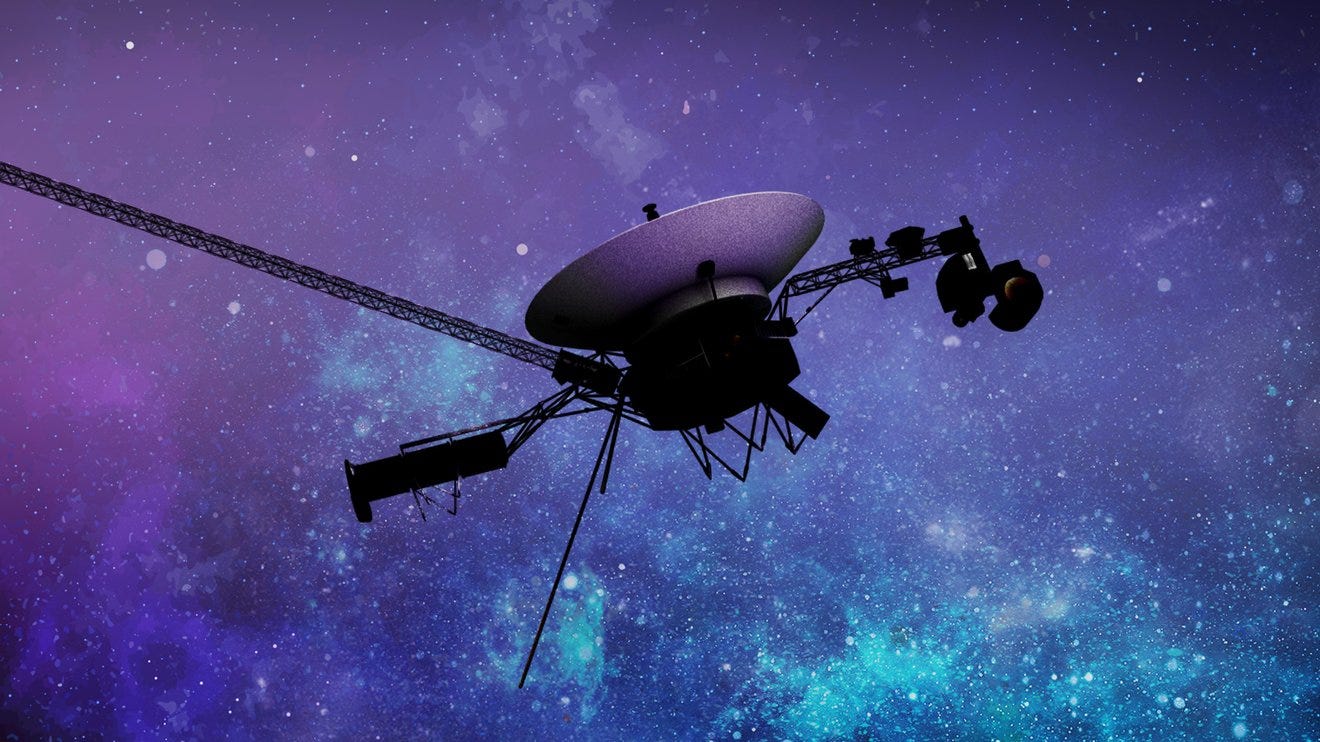
NASA shuts down another instrument on Voyager-1
NASA’s Voyager-1 spacecraft, launched in 1977, is the furthest spacecraft from Earth and one of only two to travel past the heliopause (the boundary where charged particles from the Sun can reach) into interstellar space. At more than 25 billion km away and counting, it’s too far to use solar panels for power, so it relies on its onboard RTG (a nuclear battery), which is slowly depleting. To keep communications running as long as possible, NASA has shut down 8 science instruments over the years, with the most recent, the LECP (which studies charged particles from outside the solar system), shut down last week. While Voyager-1 doesn’t need power to keep moving, since there’s no friction in space, it does need power for its instruments and communications.
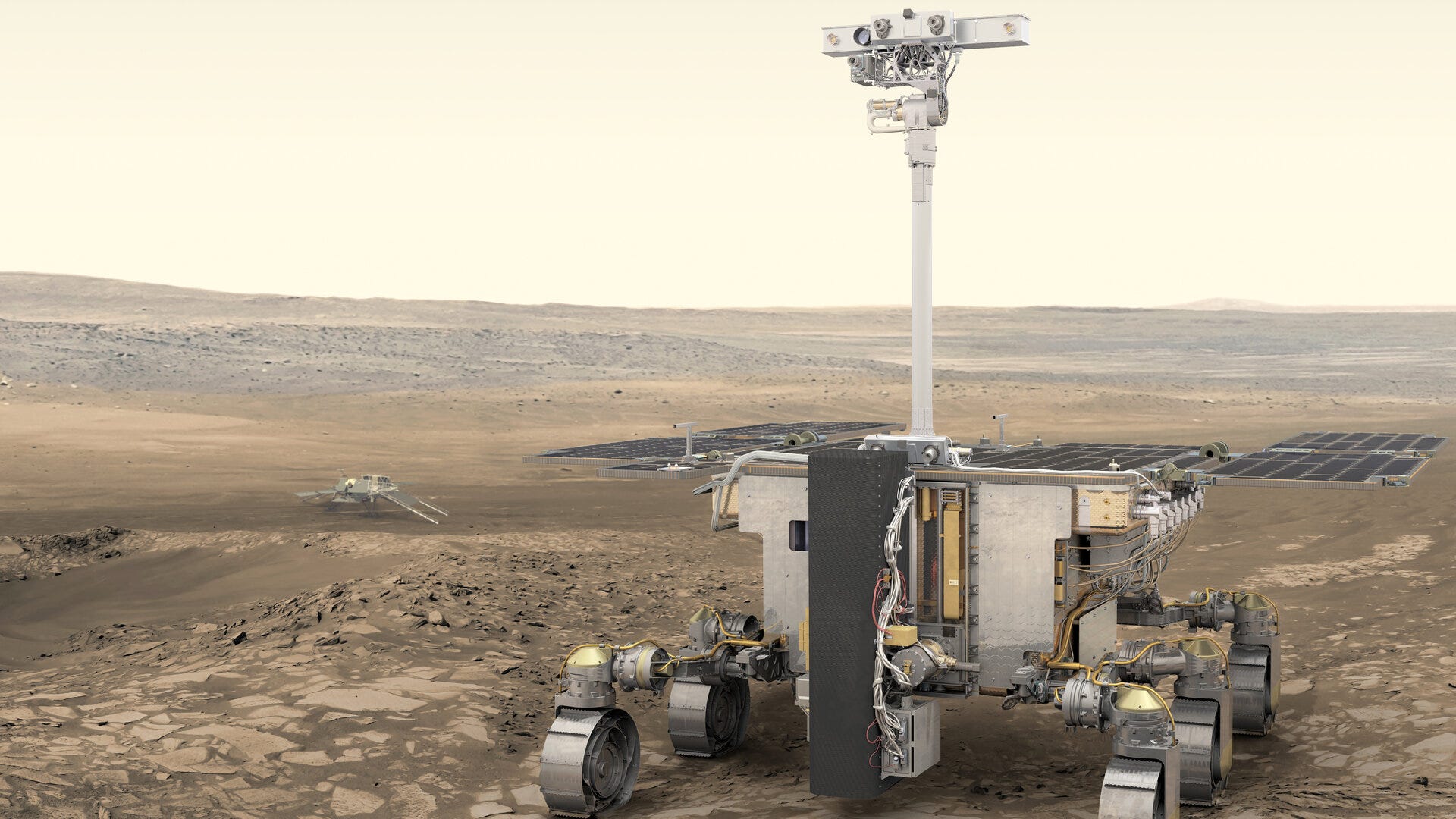
NASA approves support for ESA’s Mars mission
Recently, NASA announced its support for ESA’s Rosalind Franklin mission to land a rover on Mars. As part of its Rosalind Franklin Support and Augmentation (ROSA) project, NASA will provide hardware, including instruments and landing technology, and will also conduct the launch. The Rosalind Franklin rover will aim to search for signs of life on Mars.
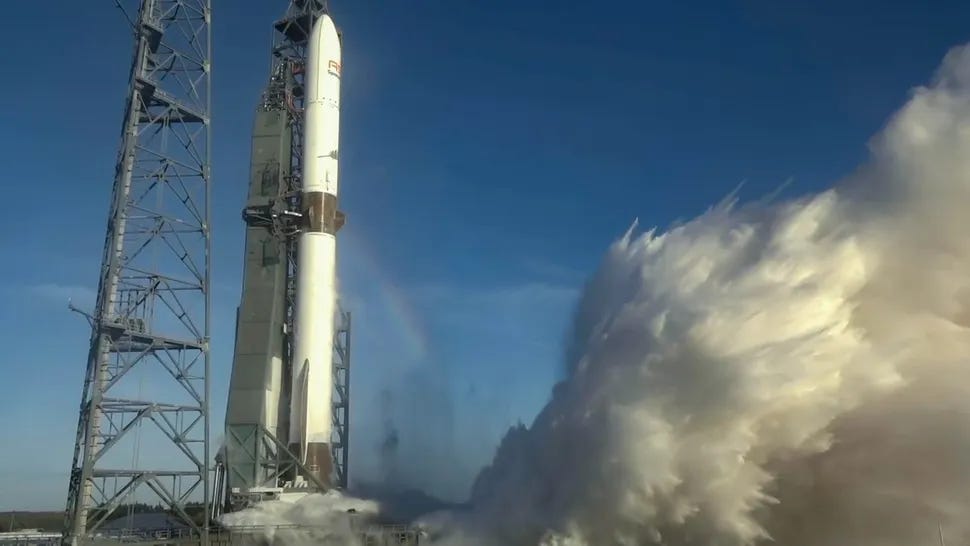
Blue Origin to test reused hardware in upcoming flight
American private firm Blue Origin is gearing up for a launch this Sunday, April 19th. This is the 3rd flight of its ‘New Glenn’ heavy lift rocket that has been under development for the past few years. This 3rd flight has one key difference — it will reuse a previously flown first stage with new engines. This means the fuel tanks, pressurisation systems, flight computer and more are being reused from the previous flight. Reusable rockets can help massively cut down on launch costs.
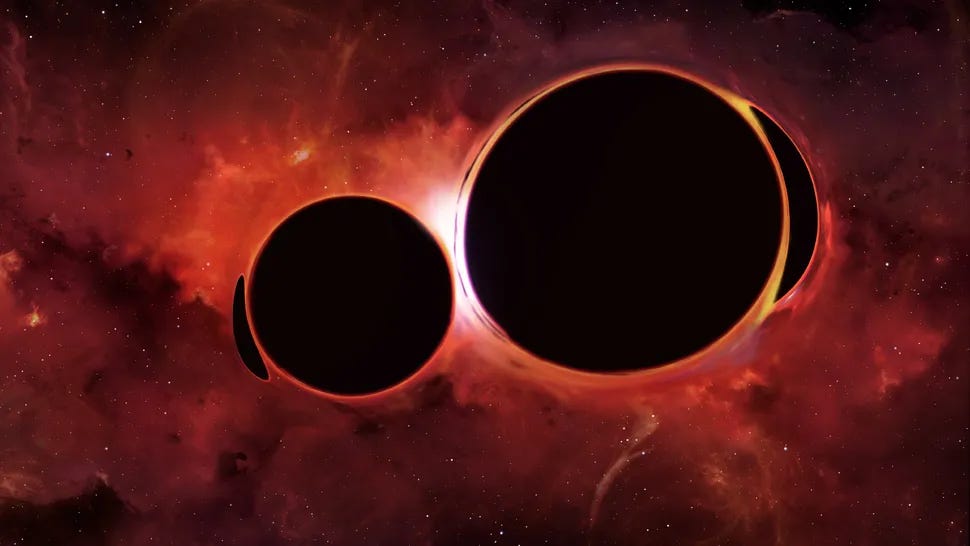
Scientists find a second hidden black hole in Markarian 501
While the existence of a supermassive black hole in the centre of the distant galaxy Markarian 501, located 500 million light-years from Earth, has long been known, it was only recently that scientists made a groundbreaking discovery. They identified that there was a second equally massive black hole, forming a binary system where the two circle each other and are spiralling closer. The two are so close (about 4000 light minutes apart) that scientists expect them to merge in about 100 years. This is incredibly fast compared to most black hole merger which take aeons to occur. Black hole mergers are so rare that they have only been theorised so far.