

Our Engagement Palette!
Check out our colour-coded system for our weekly space news:
🟤 Brown: For weeks that are mundane and bland.
🟡 Yellow: For fairly interesting weeks.
🟢 Green: For the most exciting weeks.
This Palette will help you decide if this week’s news is worth your time!
This week ranks green 🟢 on the Engagement Palette.
NASA prepares first-ever medical evacuation from the ISS
NASA has announced plans to evacuate an astronaut from the International Space Station after a crew member fell seriously ill with an undisclosed condition. The astronaut’s name has not been released. The agency will return all four members of Crew-11 on Wednesday, January 14, cutting their mission short by about a month. Crew-11 includes two NASA astronauts, one from JAXA, and one from ROSCOSMOS. This marks the first time NASA has conducted a space medical evacuation, meaning that, unlike previous, less severe incidents, the agency has stated that the primary reason for the return is a crew member’s medical condition.

Aditya-L1 makes breakthroughs in studying solar storms
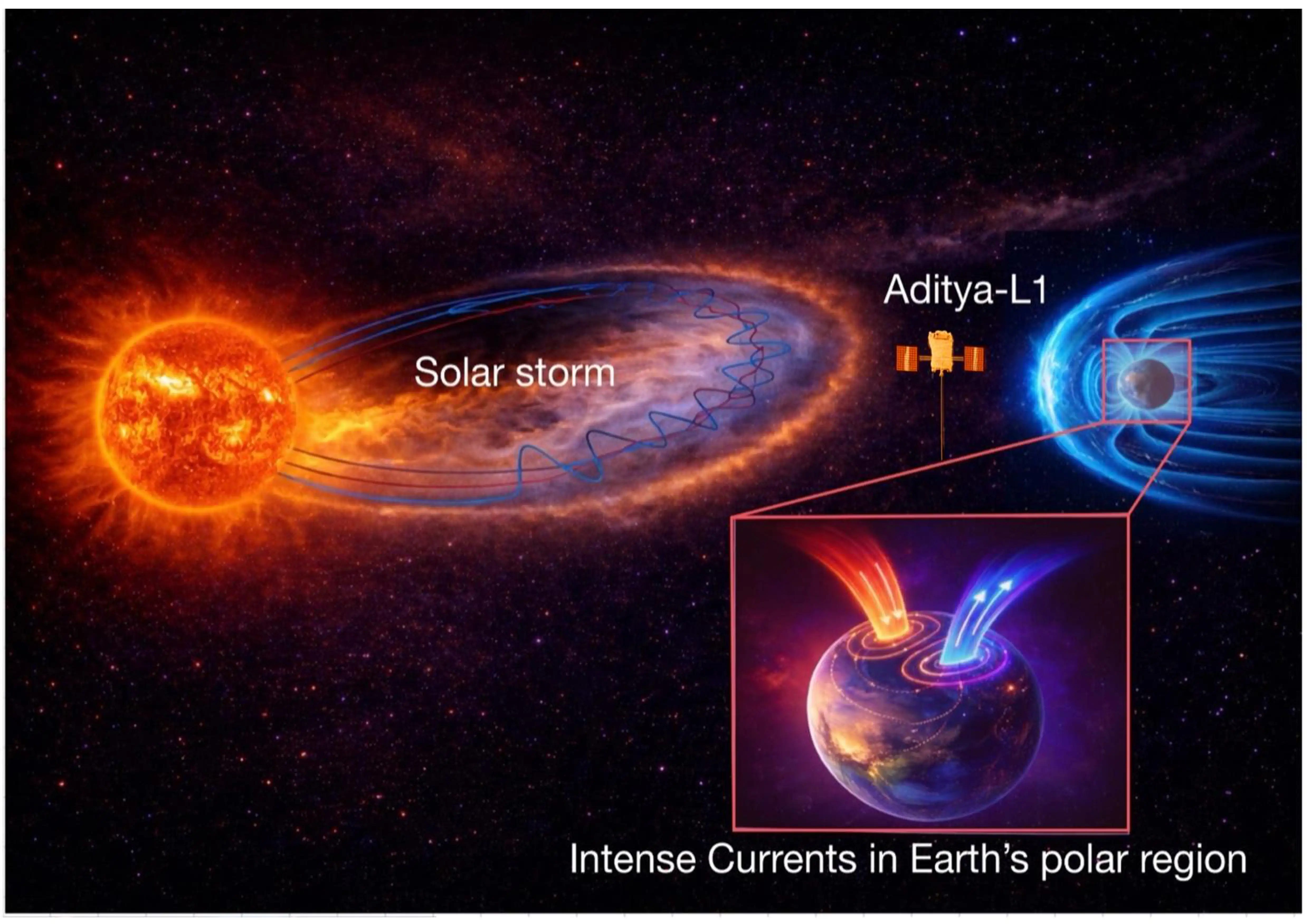
ISRO’s solar observation spacecraft Aditya-L1 recently studied a highly powerful solar storm that occurred in October 2025 and made several breakthrough discoveries in how solar storms affect the Earth’s magnetic field. Solar storms are massive clouds of charged particles ejected by the sun. It has two parts – the main core, a big dense cloud of particles and the turbulent sheath, the chaotic front. Until now, the main core was believed to cause the most damage to the Earth’s magnetic field, but ISRO’s study helped conclude that the turbulent sheath is actually more damaging. It also helped link solar storms to long-term atmospheric loss, rather than just short-term disturbances.
Scientists find fastest spinning large asteroid
Recently, scientists discovered an asteroid named “2025 MN45” about 700 metres in length, found to be spinning so fast that it completes one rotation every 5 minutes. This makes it the fastest asteroid among those larger than 300 metres, classified as ‘Large Asteroids’.
