Our Engagement Palette!
Check out our colour-coded system for our weekly space news:
🟤 Brown: For weeks that are mundane and bland.
🟡 Yellow: For fairly interesting weeks.
🟢 Green: For the most exciting weeks.
This Palette will help you decide if this week’s news is worth your time!
This week ranks brown 🟤 on the Engagement Palette.
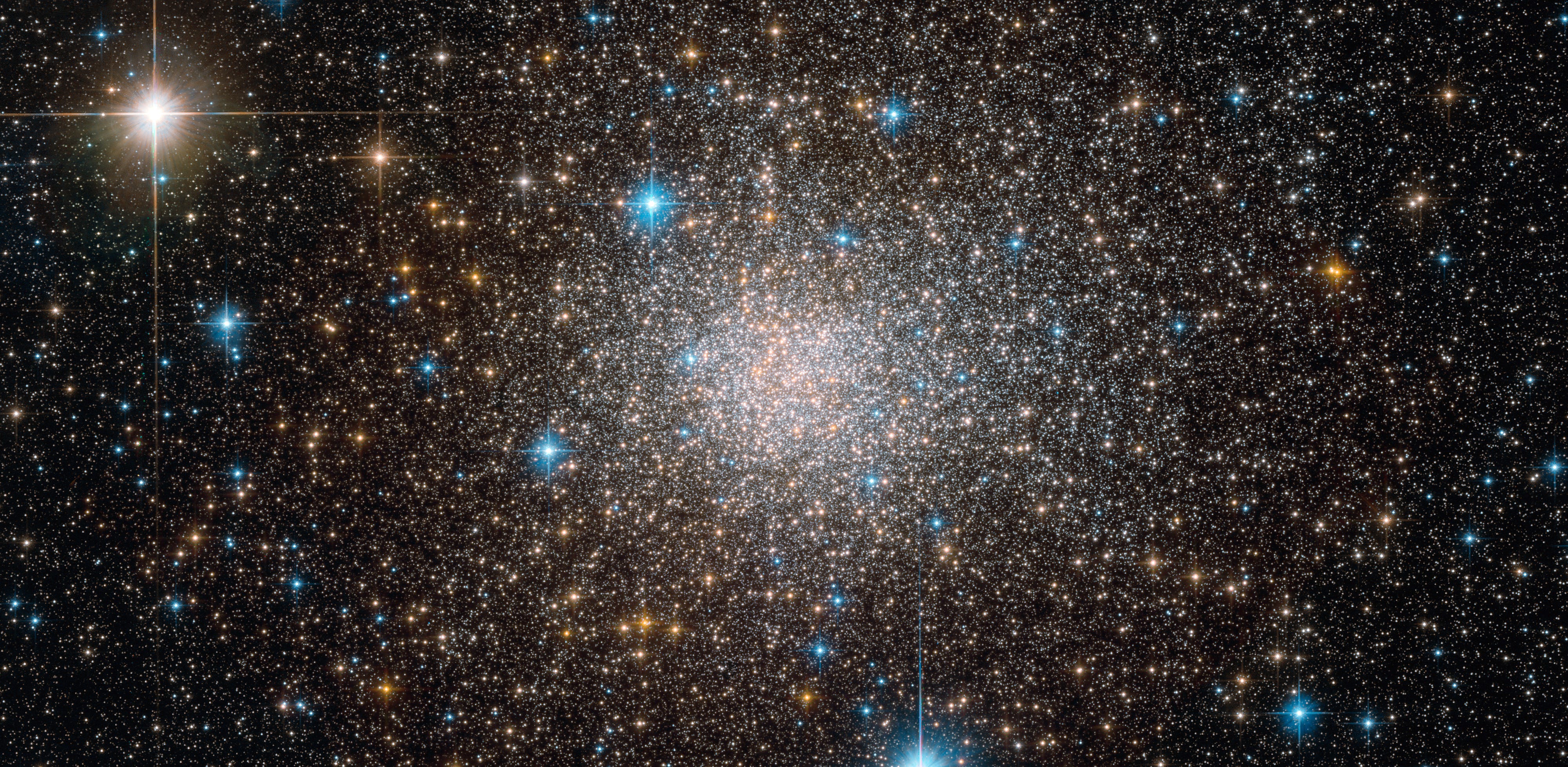
NASA discovers Terzan 5 is not an ordinary globular cluster
Terzan 5 was long believed to be a globular star cluster, a type of stellar system in which most stars form around the same time, roughly 12 billion years ago. However, recent observations from the James Webb Space Telescope and the Hubble Space Telescope revealed that Terzan 5 contains at least four distinct generations of stars, including some that formed only about 2.5 billion years ago. In smaller stellar systems, supernova explosions can drive away much of the gas needed to create new stars. Terzan 5 appears to have been massive enough to retain this material, allowing new generations of stars to form over billions of years. These findings suggest that Terzan 5 is likely the surviving remnant of a much larger ancient stellar system that existed while the Milky Way was still forming.