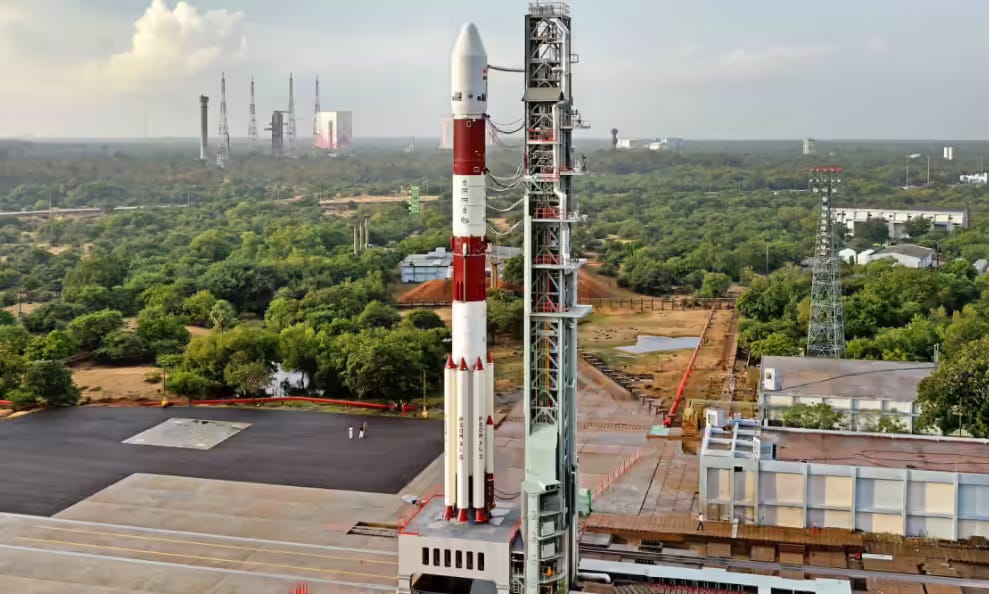
A common misconception about rockets is that once launched, the huge vehicle, often taller than a 10-storey building, reaches space in one piece and deploys the satellite into orbit. This is absolutely not true. Not only would this be a massive waste of fuel, but it also decreases its payload capacity. This is why most rockets are separated into pieces called stages. Each stage has an independent propulsion system and fuel tank, so that when it has completed its role and its fuel supply runs out, it can be jettisoned from the rest of the rocket. This gradually reduces the mass of the rocket, and the upper stages need much less fuel. To understand why staging is necessary in the first place, we first need to understand what it takes to reach orbit.
What does it take to reach orbit?
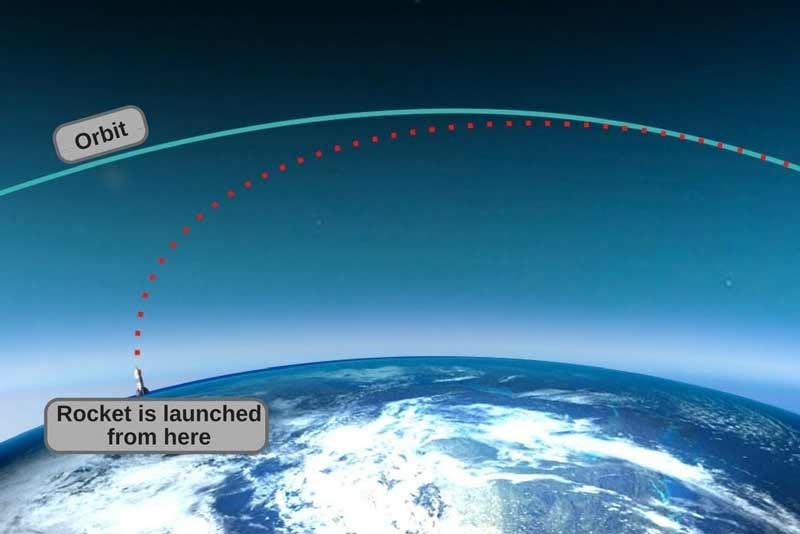
A common way to explain this concept is through Newton’s Cannonball, a thought experiment proposed by Isaac Newton. He imagined firing a cannonball horizontally from a very tall mountain. A slow shot would land nearby, while a faster one would land farther away. If the cannonball were fired fast enough, it would keep falling around the Earth indefinitely, because the Earth is curved and the ground drops away beneath it as it moves forward.

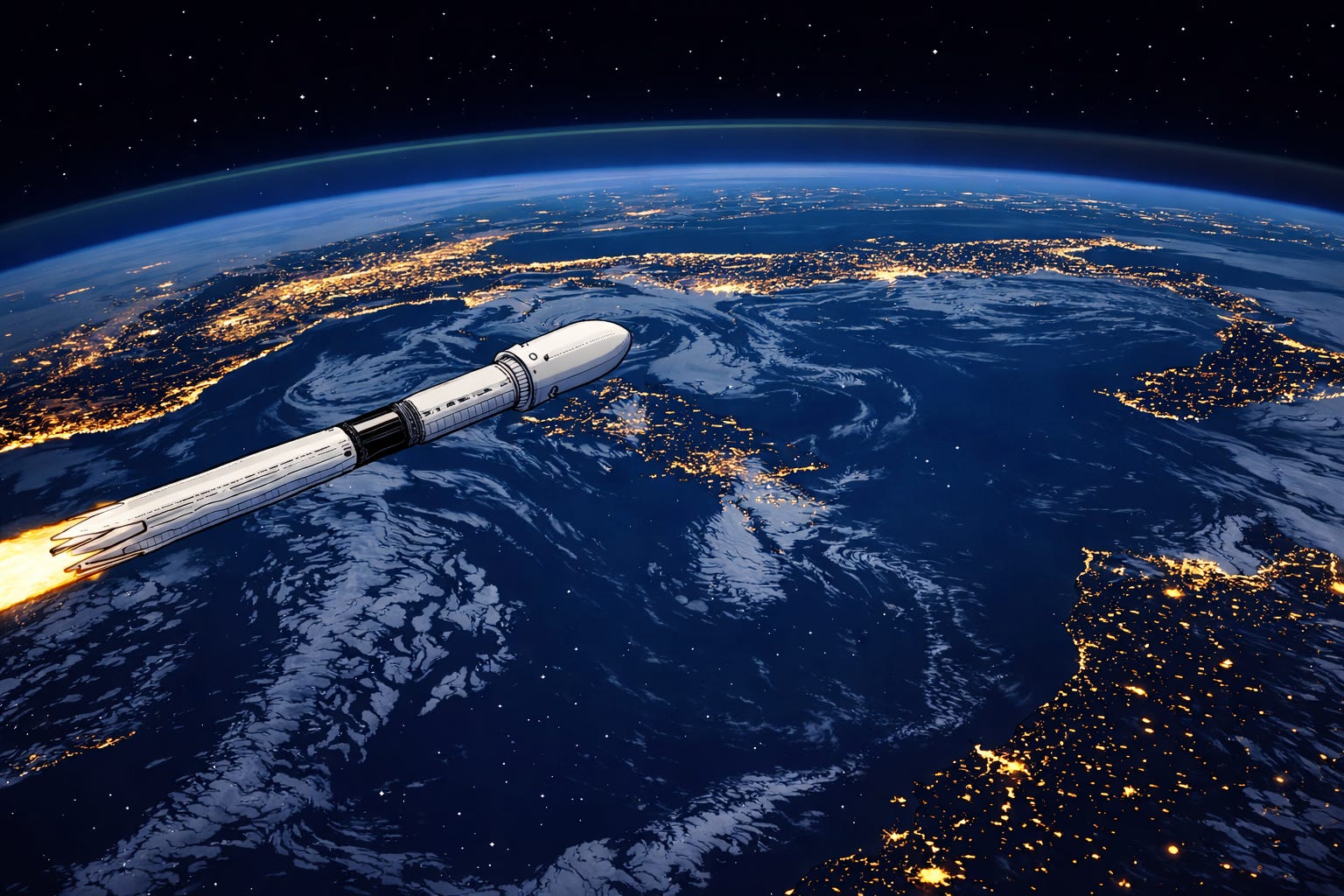
The same idea applies to a rocket. Here we encounter another common misconception that rockets go straight up into space to launch a satellite. If this were the case, it would fall back down the second the engines shut off. This is why rockets mostly go sideways like Newton’s cannonball. Calculations have estimated the required speed (orbital velocity) to be about 7.8 km/s or 28,000 km/ hr to reach Low Earth Orbit. Any rocket that cannot achieve such speeds will not make it to orbit.
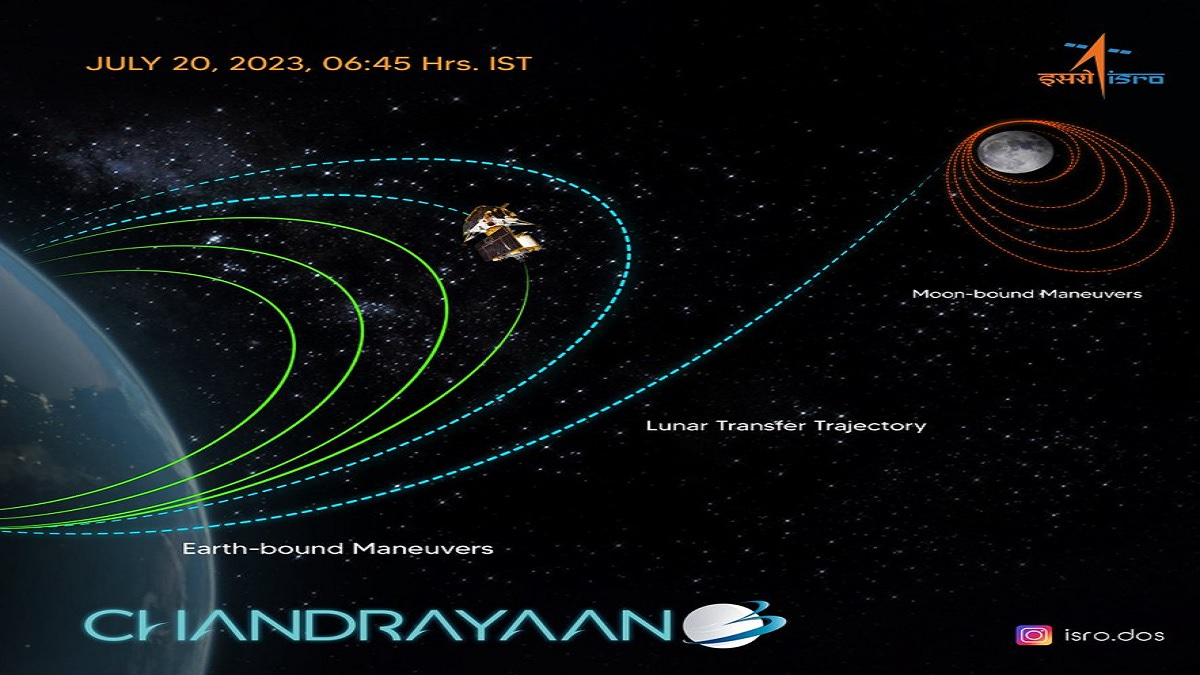
To escape Earth’s gravity entirely for missions to other planets or moons, an object needs to go at even higher speeds of 11.2 km/s (escape velocity). Many rockets cannot achieve escape velocity, but can achieve orbital velocity, so they instead initially put their payloads in low orbits and gradually increase the size of the orbit until it escapes completely. This is what missions like Chandrayaan-3 did.
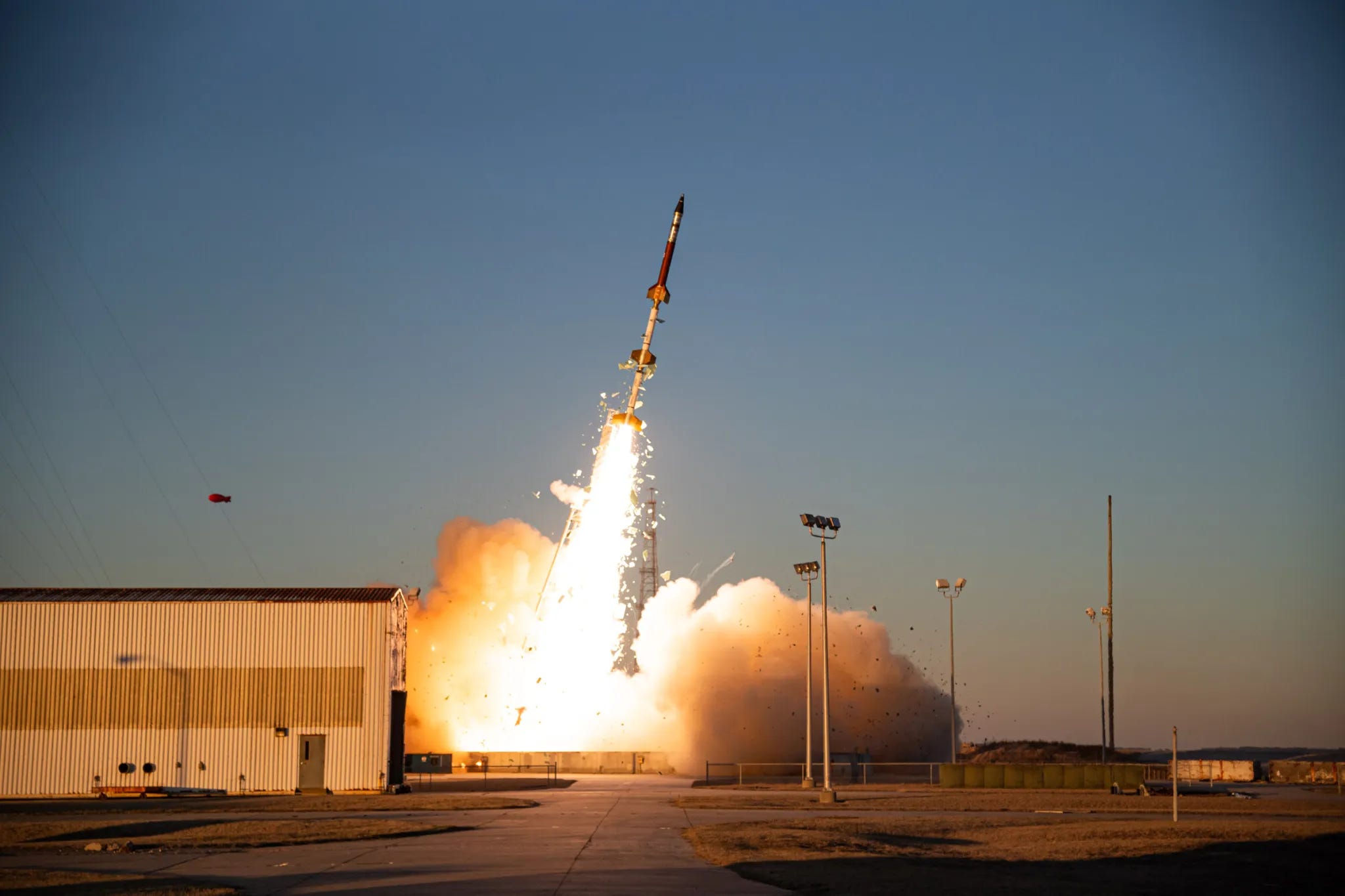
Single Stage (Sounding Rockets)
Sounding Rockets are simple and inexpensive rockets designed to carry science instruments to high altitudes to study the upper atmosphere, space weather and so on. They have a very short flight time – usually just a few minutes, after which they drop back down to the Earth. No single-stage rocket today is capable of putting a satellite in orbit, as they cannot achieve orbital velocity. They can reach areas where weather balloons can’t, while being cheaper than satellites.
Double-Stage Rockets
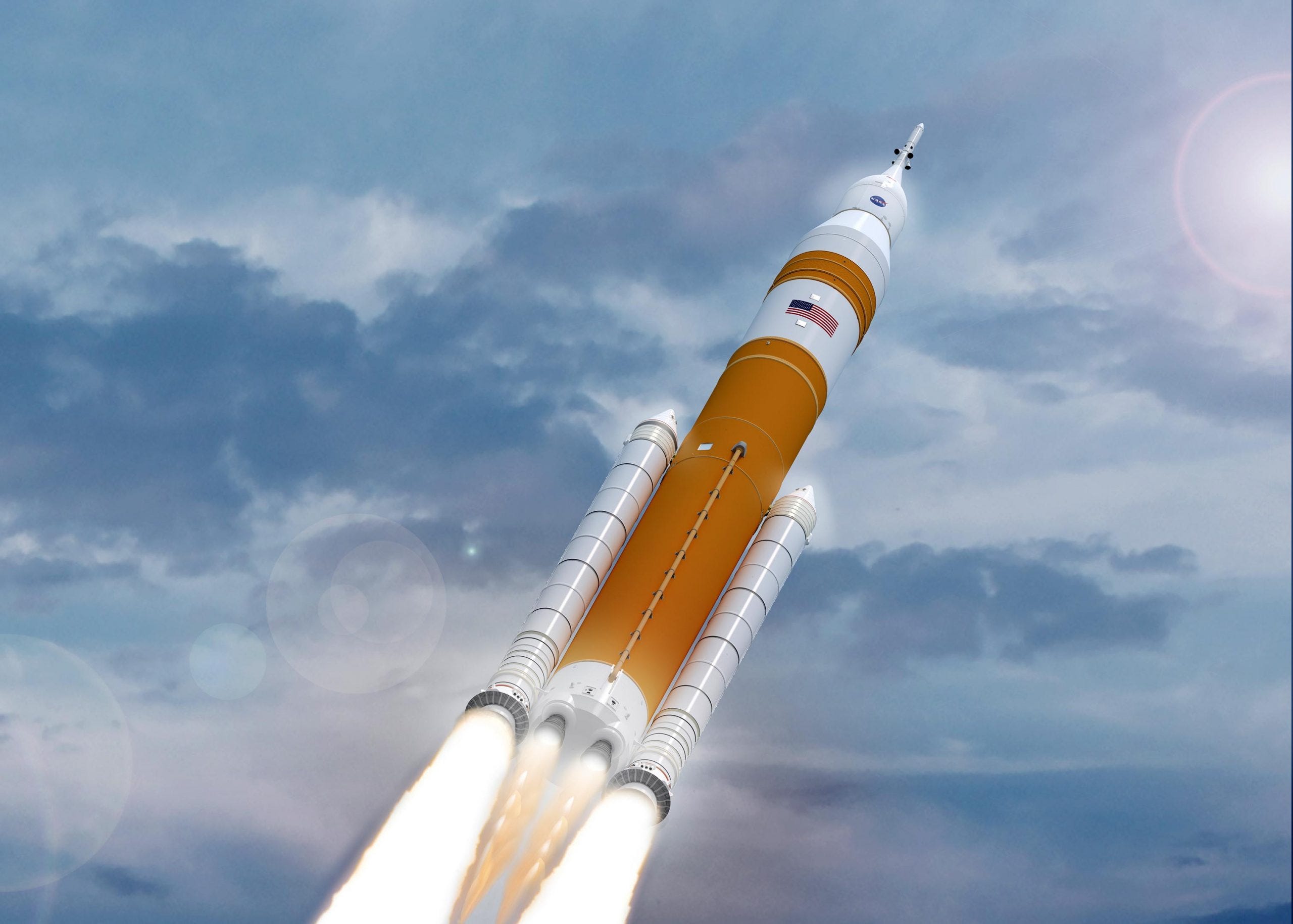
These are the most common types of rockets used today. They are much more efficient and necessary for putting a payload into orbit.
First Stage:
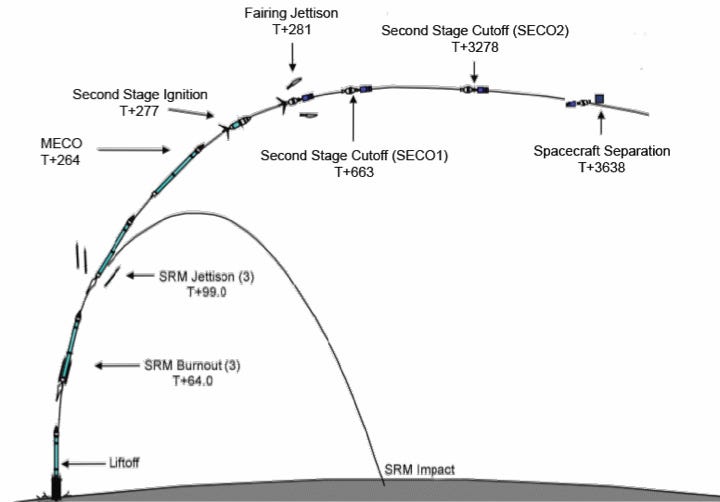
This stage contains the core rocket engines, a large fuel tank and in some cases additional strap-on boosters. They provide thrust during liftoff and get the rocket through most of the thick atmosphere. Since this requires a massive amount of thrust, the first stage is the most powerful stage of any rocket. The strap-on boosters are optional and quickly detach after providing the initial thrust. However, they are still considered part of the first stage and not as a separate stage.
Second Stage:
This stage is crucial to getting the payload into orbit. While the first stage is optimised for raw power, the second stage is optimised for efficiency and precision since it operates in a near vacuum without much air resistance. It performs precise, controlled burns, shutting down and restarting its engines as required to reach orbit. A small misfire can completely change the payload’s orbit.
Triple-stage rockets
A two-stage rocket can get you into low Earth orbit, but for satellites in Geostationary Orbit (above 35,785 km from Earth) or interplanetary missions, you sometimes need more powerful three-stage rockets.
First stage:
Has the same function in any rocket.
Second stage:
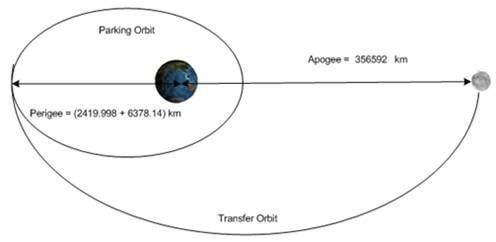
Gets the payload into a temporary orbit or a parking orbit and provides most of the orbital velocity. It has medium thrust, high efficiency and good precision.
Third stage:
This stage has low thrust as most of it was provided by the second stage. It has a very high efficiency as it operates in an almost complete vacuum. It also needs extreme precision to inject the payload into a ‘transfer orbit’ from where the payload will make its way to the final orbit using its own propulsion.
Four or more stage rockets
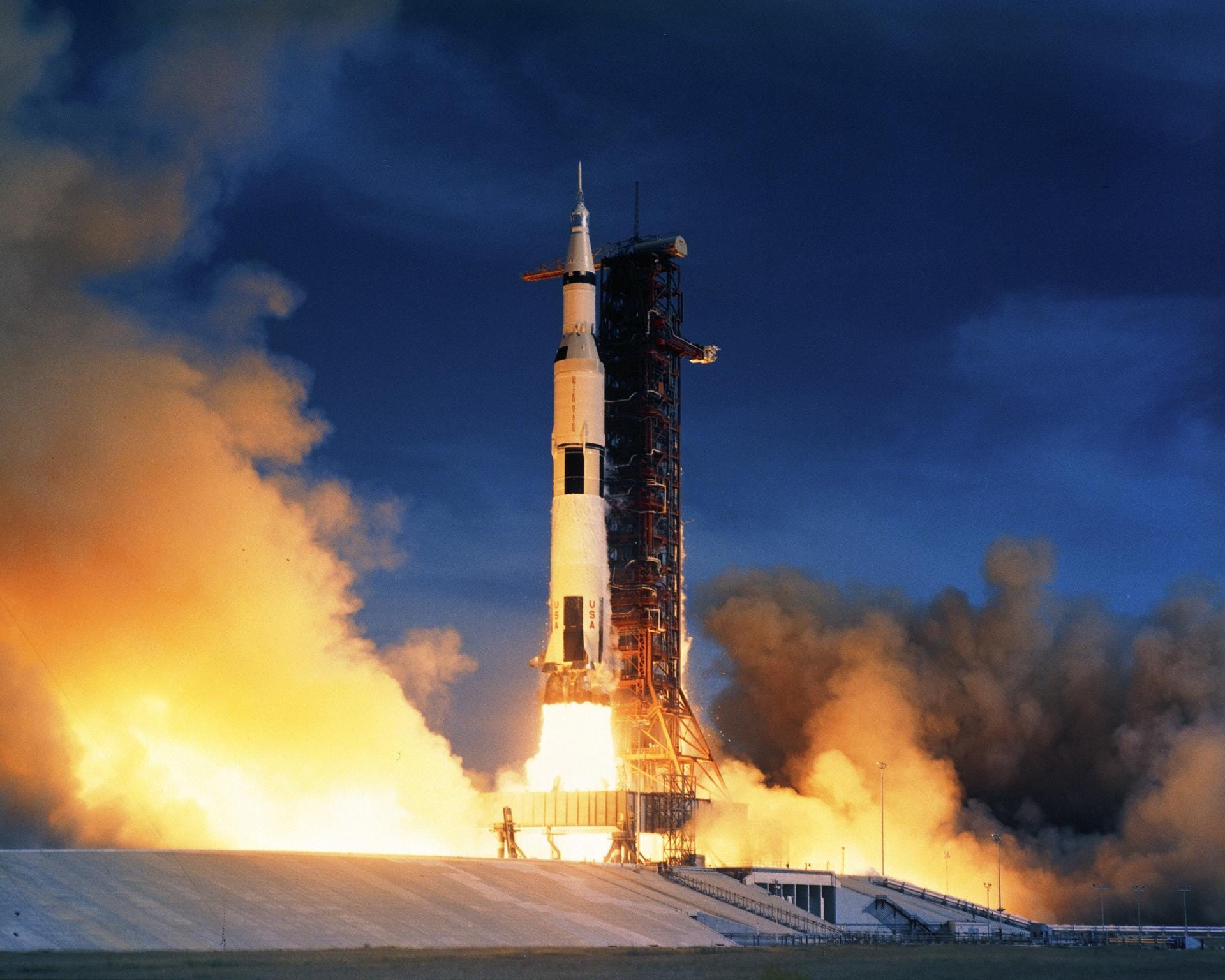
Rockets with four or more stages are very niche today, but were more commonly used historically when engines were much less efficient and heavy. They would be used to launch payloads into high-energy orbits. The main goal of the extra stages was to provide additional acceleration. Most of these stages were small and fired only for a short period of time, called ‘kick stages’. Such four-stage rockets also have their own issues, like higher chances of failure. They can also only be used to launch small payloads, as a higher mass makes it harder for the kick stages to speed up the craft much. Today, rocket engines have gotten more efficient, and much lighter materials are used to build them, thus largely eliminating the need for more than three stages. No modern heavy-lift launch vehicles use four or more stages, while a few small-to-medium lift rockets, such as PSLV, still do.