

Most people underestimate the true power of rockets. Some of the most powerful rockets today can lift over 150,000 kg of payload into space — roughly the mass of 25 fully grown African elephants — and that’s just the payload. The whole rocket may weigh as much as 5 million kg at liftoff. And the engines have to exert more thrust than that to even get the massive, 40-storey machine off the ground.
Back in 1968, NASA launched the Saturn V, a huge rocket that carried humans to the moon. It remains one of the most powerful rockets ever built, and mysteriously, no other rocket was able to surpass its power for nearly 50 years. Despite leaps in computers, materials and precision, the Saturn V reigned king in terms of raw payload capacity to orbit. Did progress stall? Why was a rocket built in the 1960s dominating records well into the 21st century? What changed?
Before we answer that, let’s take a deep dive into the history of rockets or going by the official term ‘Launch Vehicles’.
The Beginning
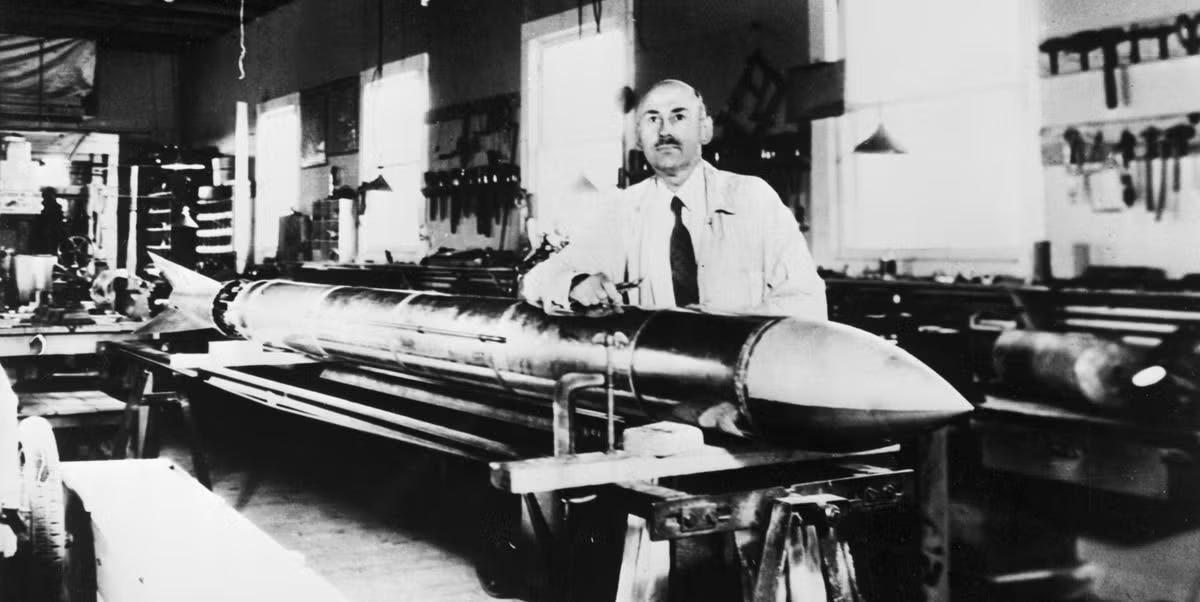
Robert Goddard’s rocket (1926)
Going by the loose definition of rockets, the earliest examples would be simple gunpowder-powered weapons like the Chinese fire arrows (13th century) or Tipu Sultan’s Mysorean rockets (18th century). It was only in 1926 that Robert H. Goddard, an American physicist, invented the modern rocket powered by liquid fuel. It introduced many concepts still in use today, like fuel and oxidiser tanks, combustion chambers, nozzles and more. It flew only for a few seconds and reached only 12 meters, but it laid the foundations for future modern rockets.
V-2 Rocket (1944)
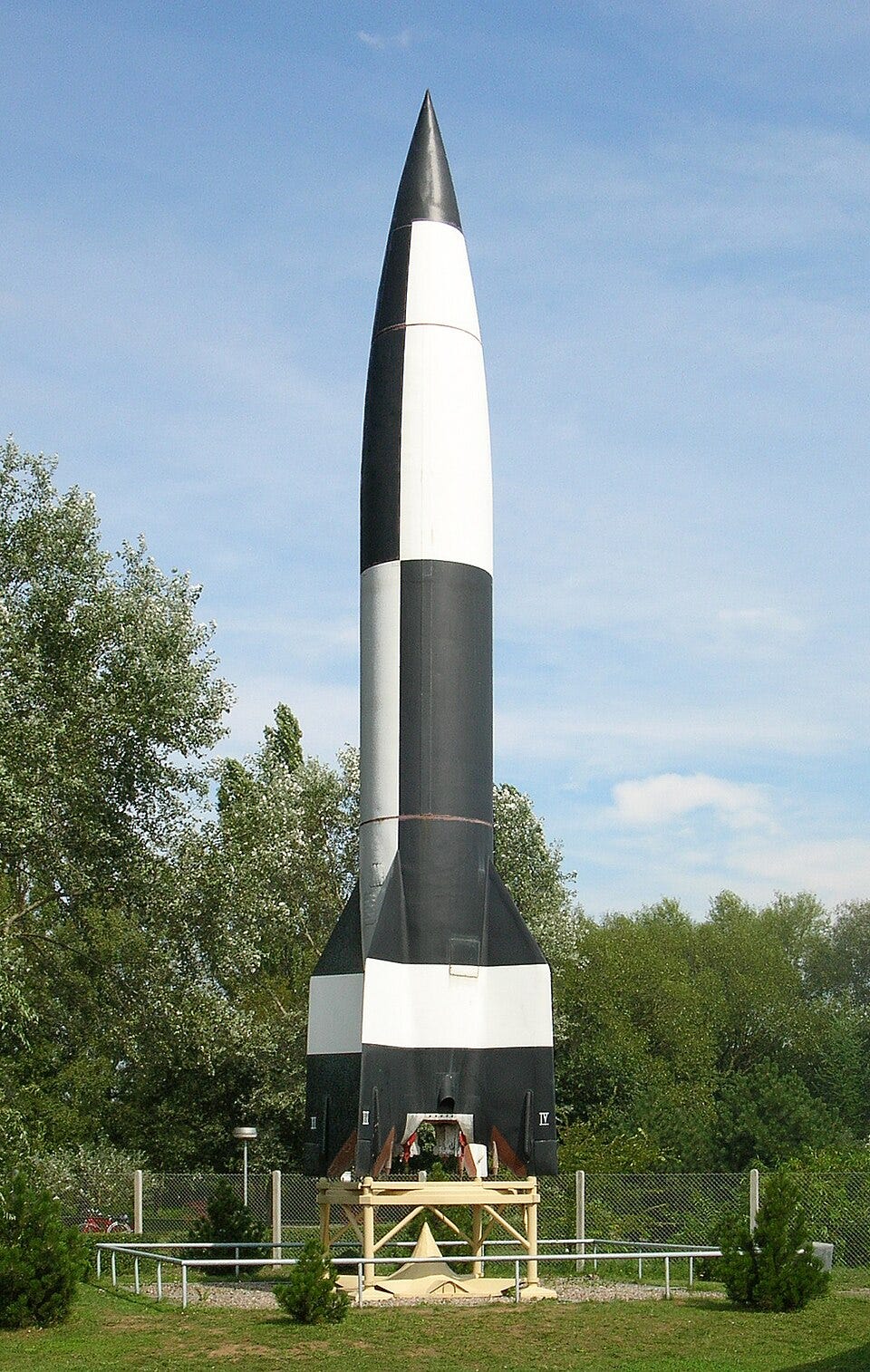
If you go by the definition of the first rocket to reach space, the V-2 rocket, built as a weapon by Nazi Germany under Wernher von Braun. It was the first human-made object to cross the Karman line at about 100 km, considered the boundary of space. It introduced the concept of turbopumps to pump fuel at high pressures into the combustion chamber. Nearly every modern rocket is believed to have descended from the V-2.
Redstone (1953)
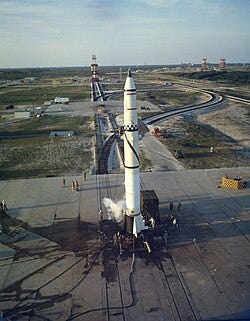
Wernher von Braun was brought to the USA after World War 2 and worked with the military and later NASA to create the Redstone rocket. It was directly influenced by the V-2 and much later became famous for NASA’s human spaceflights as part of Project Mercury for human suborbital flights like that of Alan Shepard. This rocket was never meant to reach orbit.
The First Space Age
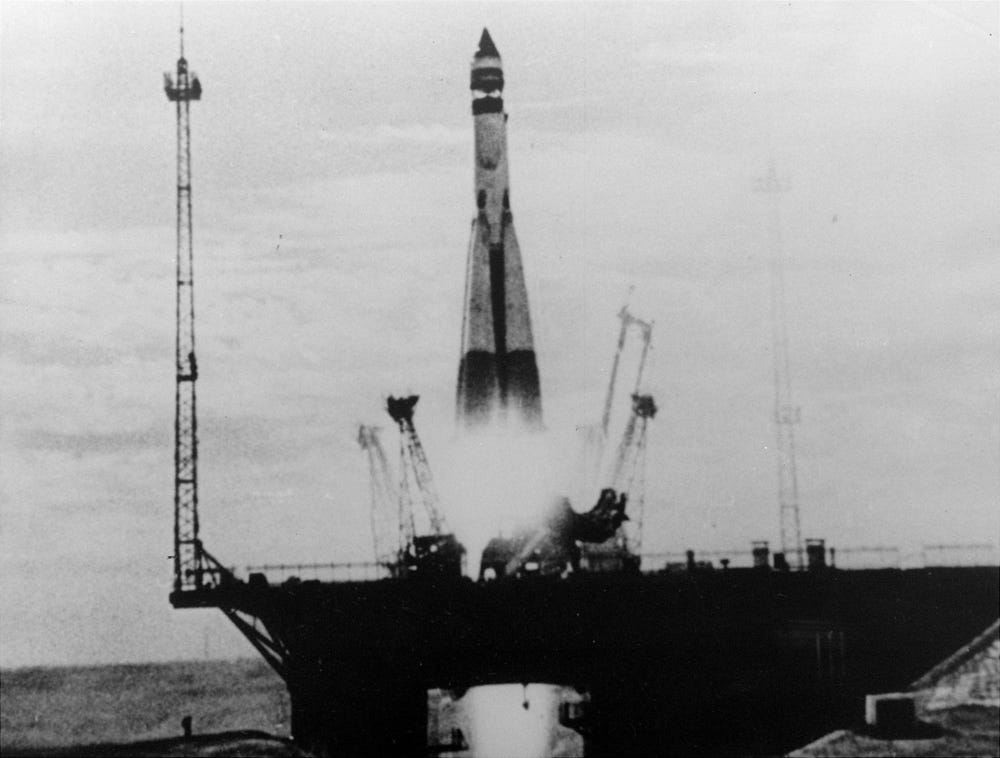
Soviet R-7 (1957)
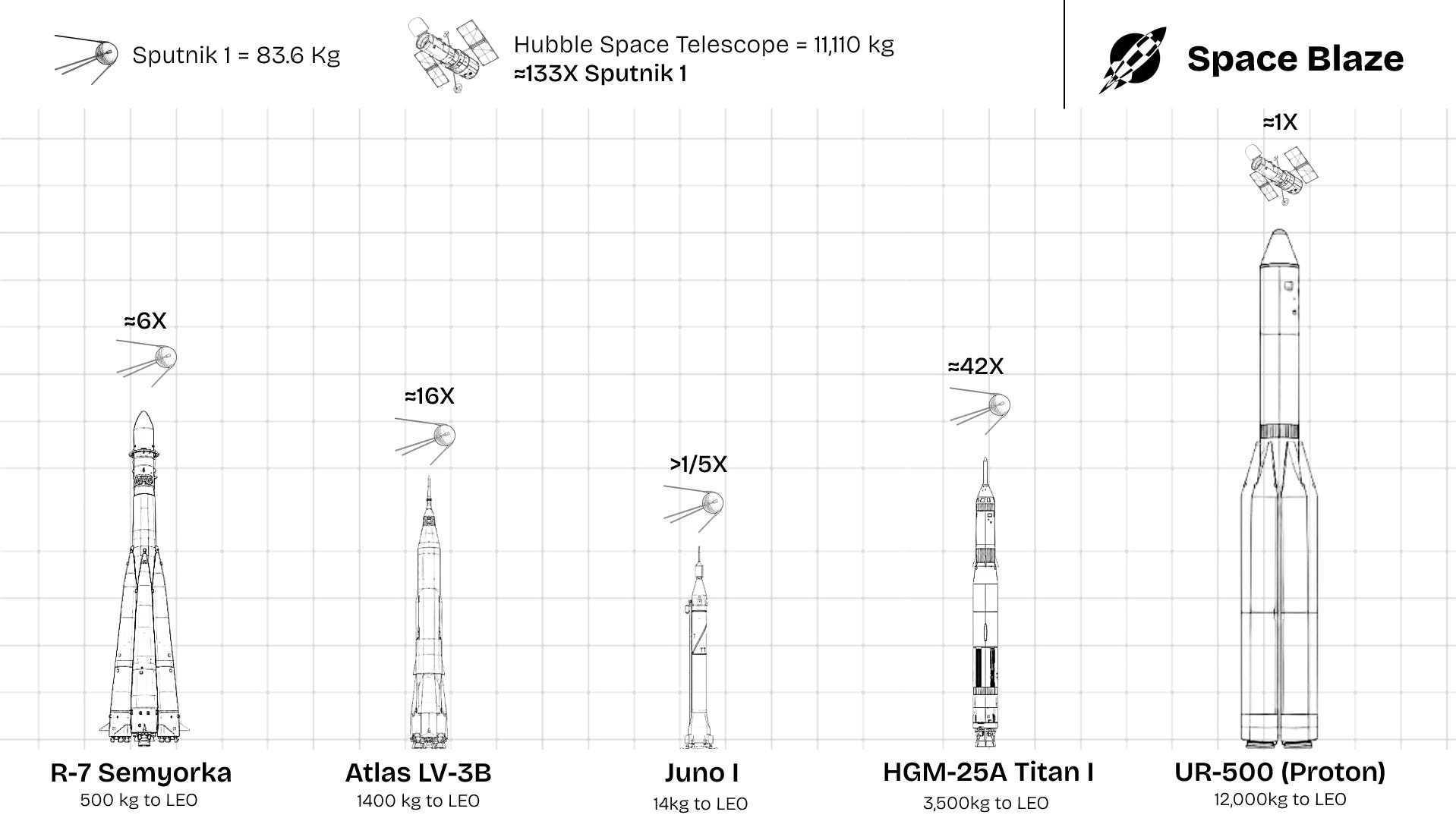
The R-7 rocket built by the Soviet Union was the first rocket to place a satellite (Sputnik 1) in orbit. Initially built as an ICBM (Intercontinental Ballistic Missile), it was later repurposed for space launch, as we have seen for many rockets in the early days of space flight. A variant of the same rocket (Vostok-K) was used to put the first human in space - Yuri Gagarin. Russia's Soyuz rockets today are also derived from the same family. This rocket is considered to have kicked off the first space age, where rockets and space missions began to be viewed as national-level engineering projects. The R-7 was considered highly powerful at the time.
Atlas (1957)
The Atlas rocket family was an ICBM modified for space. It was involved in orbital launches for Project Mercury and launched the first American to orbit Earth, John Glenn, in 1962.
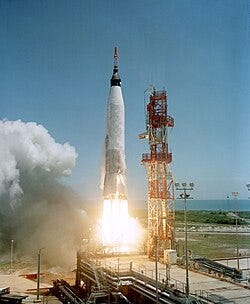
In May 1963, the Atlas Centaur was launched, becoming the first rocket to use highly efficient hydrogen fuel in its upper stages successfully.
A modern descendant of the Atlas rocket, the Atlas V, is still active as of 2026 but is in the process of being retired.
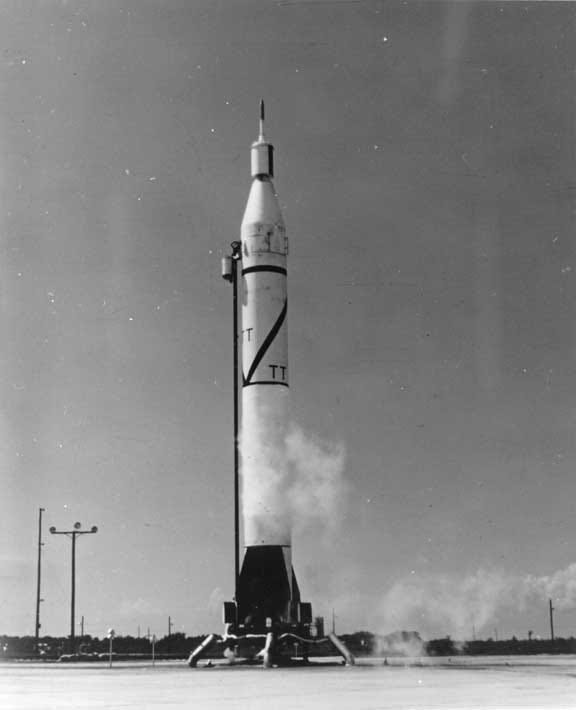
Juno (1958)
While Atlas had already conducted its first launch in 1957 as an ICBM, it was mainly a test launch without any real payload. Meanwhile, NASA launched its first satellite in response to Sputnik, called Explorer 1, on board its Juno rocket. Juno was a descendant of Redstone, but more space-focused. Juno was much less powerful than the R-7.
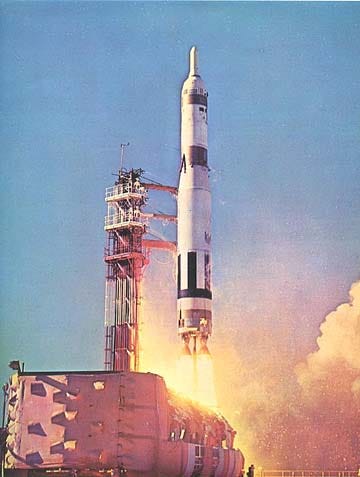
Titan (1959)
The Titan family was initially designed as a military backup to Atlas. Titan I used liquid oxygen, and unlike Atlas, which used only one stage with 2 additional boosters that detached some time after liftoff, it was a proper two-stage rocket.
Titan II used hypergolic fuels (fuels that ignite on contact) instead. This allowed it to be stored for longer. This was the rocket used for the Gemini missions, a successor to the Mercury missions that supported two astronauts instead of one and focused on extended capabilities like orbital manoeuvring, docking, spacewalks and more.
Proton (1965)
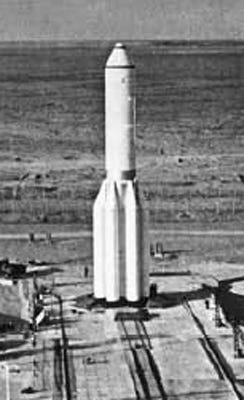
Initially called the UR-500, this giant repurposed ICBM got its name due to a series of satellites called the Proton satellites, and eventually, people started to call it the Proton rocket.
Descendants of this heavy lift rocket were much later used to build the International Space Station and missions to other planets. The Proton-M variant is still in use today, though gradually being phased out.
Saturn (1961)
The Saturn family of rockets saw NASA experimenting with heavy-lift rockets as a precursor to the moon missions.
Saturn I
Saturn I was the first such rocket. Its main purpose was to prove heavy lift launches could work. It was never capable enough or designed to reach the moon. It was built by bundling together 8 engines from the Redstone rockets with 1 central engine from the more powerful Jupiter rocket. Instead of building a new rocket, NASA just quickly reused existing technology. This is also why the Saturn I had 9 separate fuel tanks in total, 1 for each engine, a quirky and inefficient shortcut.
Saturn IB
Saturn IB was twice as powerful as Saturn I in terms of payload capacity. It could now carry an actual crew into Earth orbit instead of just test equipment. The second stage of the rocket is what received the main upgrade, where instead of using six small RL-10 engines, it was replaced with one large J-2 engine.
Saturn V
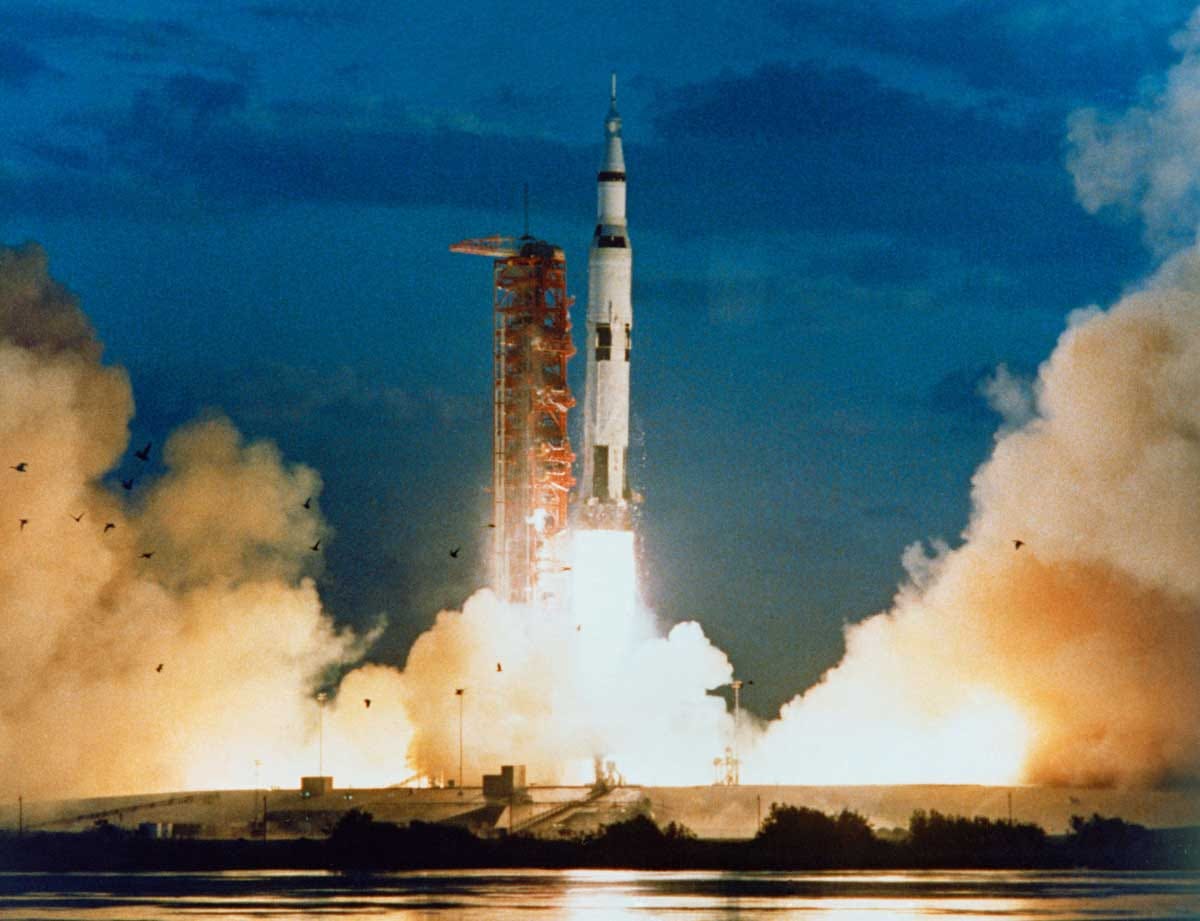
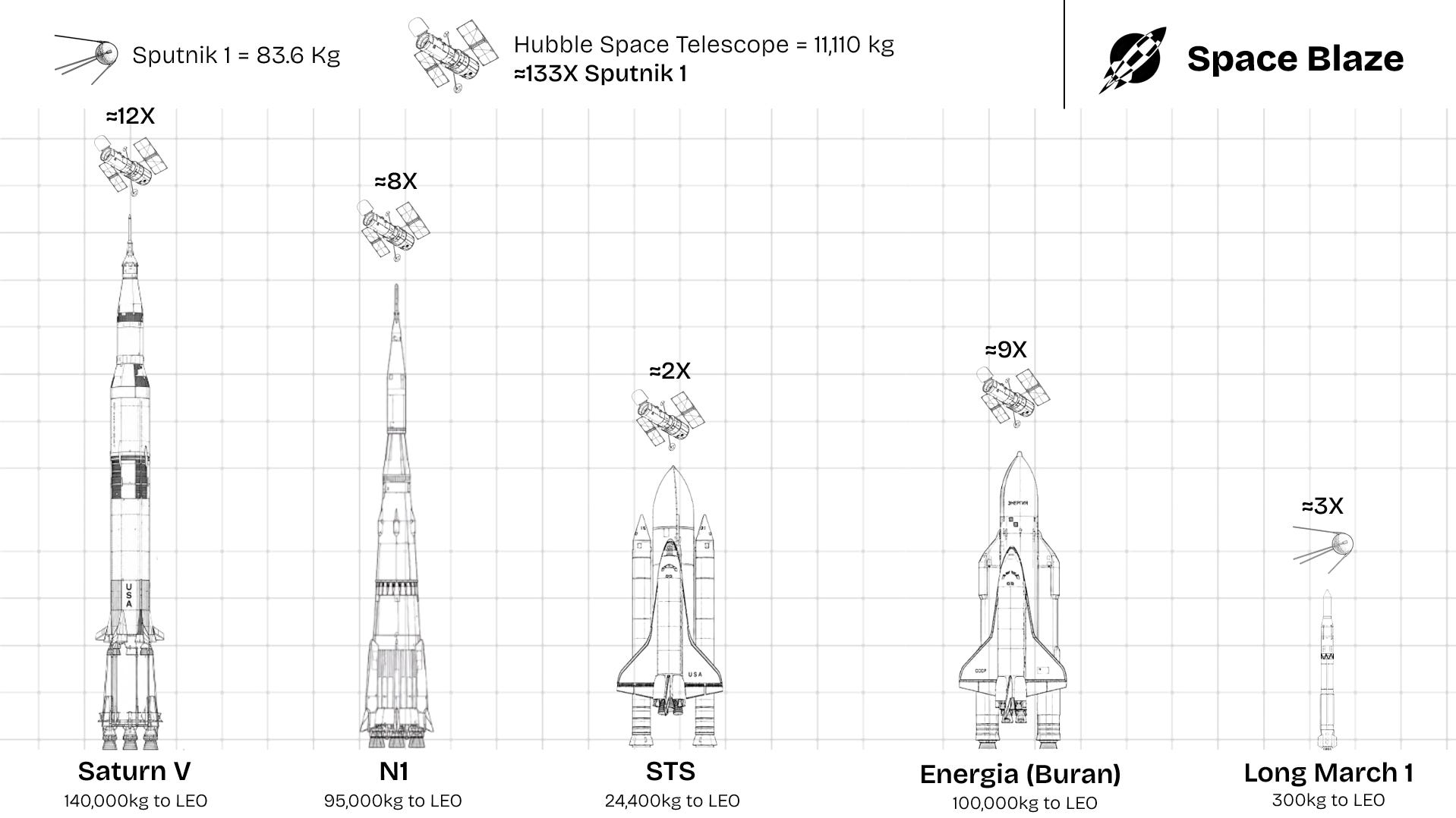
After the Saturn IB came the real behemoth, nearly worthy enough to be classified as a whole new category. The Saturn V rocket was the official rocket used for the Apollo moon missions. With a 140 ton payload capacity, it could lift nearly 14 times more than the Saturn I and boasted 5 gigantic F-1 engines. Each engine alone could produce more thrust than the entire Saturn I. Unlike the other members of the Saturn family, it also used single massive fuel tanks instead of tank clusters. The rocket was so powerful that it used about 15 tons of fuel per second during liftoff.
Now we come to the mystery we started with: why could no rocket match the power of the Saturn V for decades?
Part of the answer is that the world simply stopped needing one. During the space race with the Soviet Union, the USA essentially brute-forced its way to the Moon with little regard for cost or reusability. Once the Apollo missions succeeded, there was no reason to continue flying more Moon missions. Ideas like Moon bases or missions to Mars were not seriously being pursued at the time. Most other missions, such as launching satellites and probes, didn’t require anywhere near that level of power. So the Saturn V held the record for so long not only because it was difficult to build, but because there was little need for anything like it.
However, a few rockets came close…
N-1 Rocket (1969)
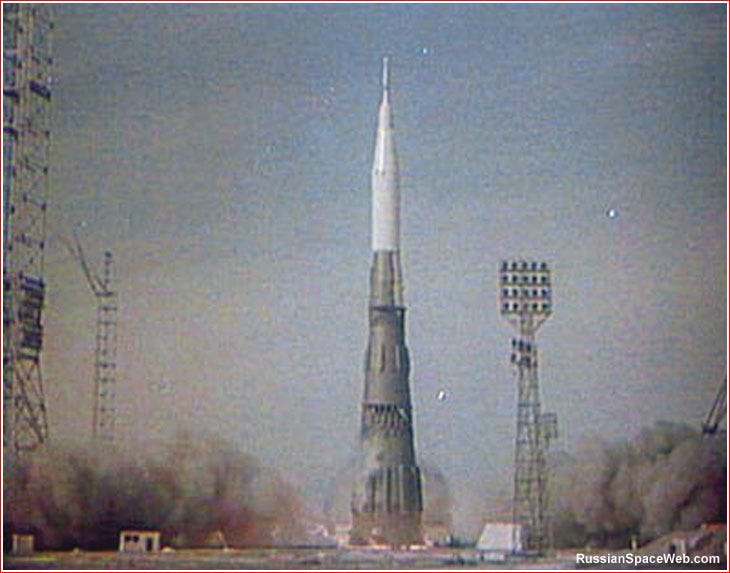
The N-1 rockets were the Soviets’ attempt at a super-heavy lift moon rocket. Since the Soviet Union lagged behind in highly efficient hydrogen fuels, their rockets mostly used Kerosene for all stages. They tried to get around this by using 30 NK-15 engines on their rocket. However, this system was extremely complex and lacked enough testing, and every single launch failed, some catastrophically.
Shuttle and Station Era
STS Space Shuttle (1981)
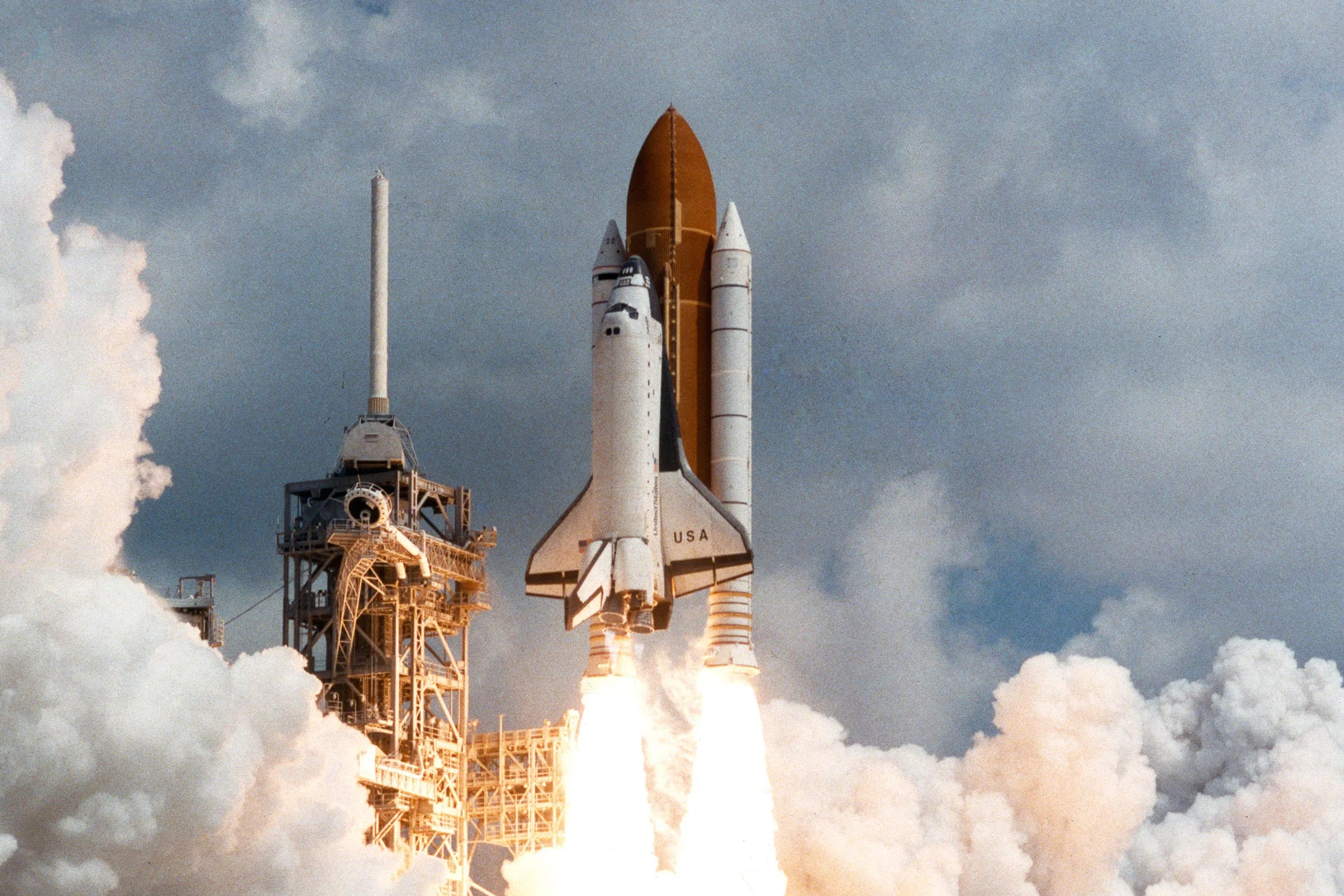
As the number of satellite launches began to increase, NASA needed a cost-effective way to launch payloads into space. This is when the Space Shuttle was invented. Officially known as the Space Transportation System (STS), this was an aeroplane-like spacecraft that launched on board a rocket but could operate in space and land back on Earth on a runway to be reused multiple times. While NASA hoped reusability would make launches cheaper, it was disappointed to find that the cost of refurbishing the used shuttle was enormous. The Space Shuttle was heavily used to build the ISS and launch the Hubble Space Telescope.
Energia (1987)
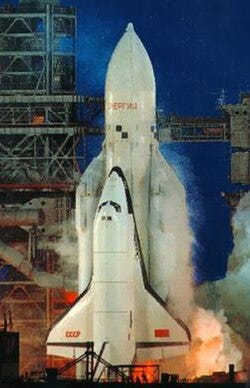
Energia was another attempt at a super-heavy launch vehicle by the Soviet Union. It was designed to launch the Soviet space shuttle - Buran. The rocket could almost rival the Saturn V in launch capacity, but was more optimised for injecting payloads into Earth orbit. It could lift multiple times more than the STS Space Shuttle. It flew successfully only twice and was discontinued after the collapse of the Soviet Union.
Long March (1970)
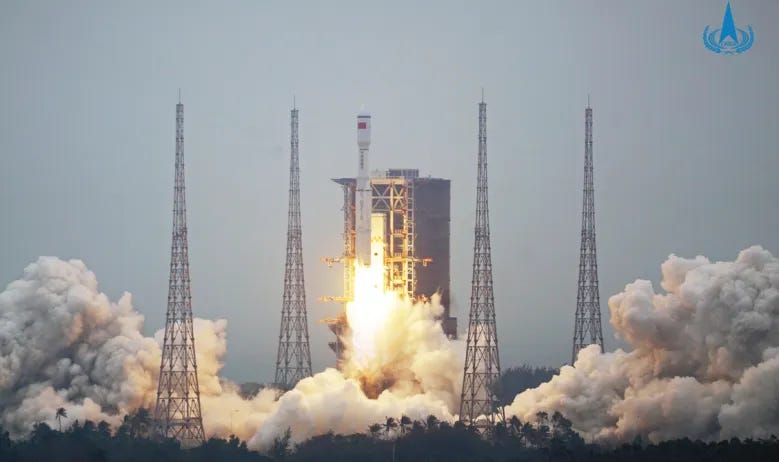
China launched its first satellite, the Dong Fang Hong 1, on board its Long March rocket in 1970. Compared to the other rockets at the time, the Long March 1 was no heavy lifter, yet it marked China’s entry into the space sector. The most recent version is the Long March 8A, with Long March 9 under development.
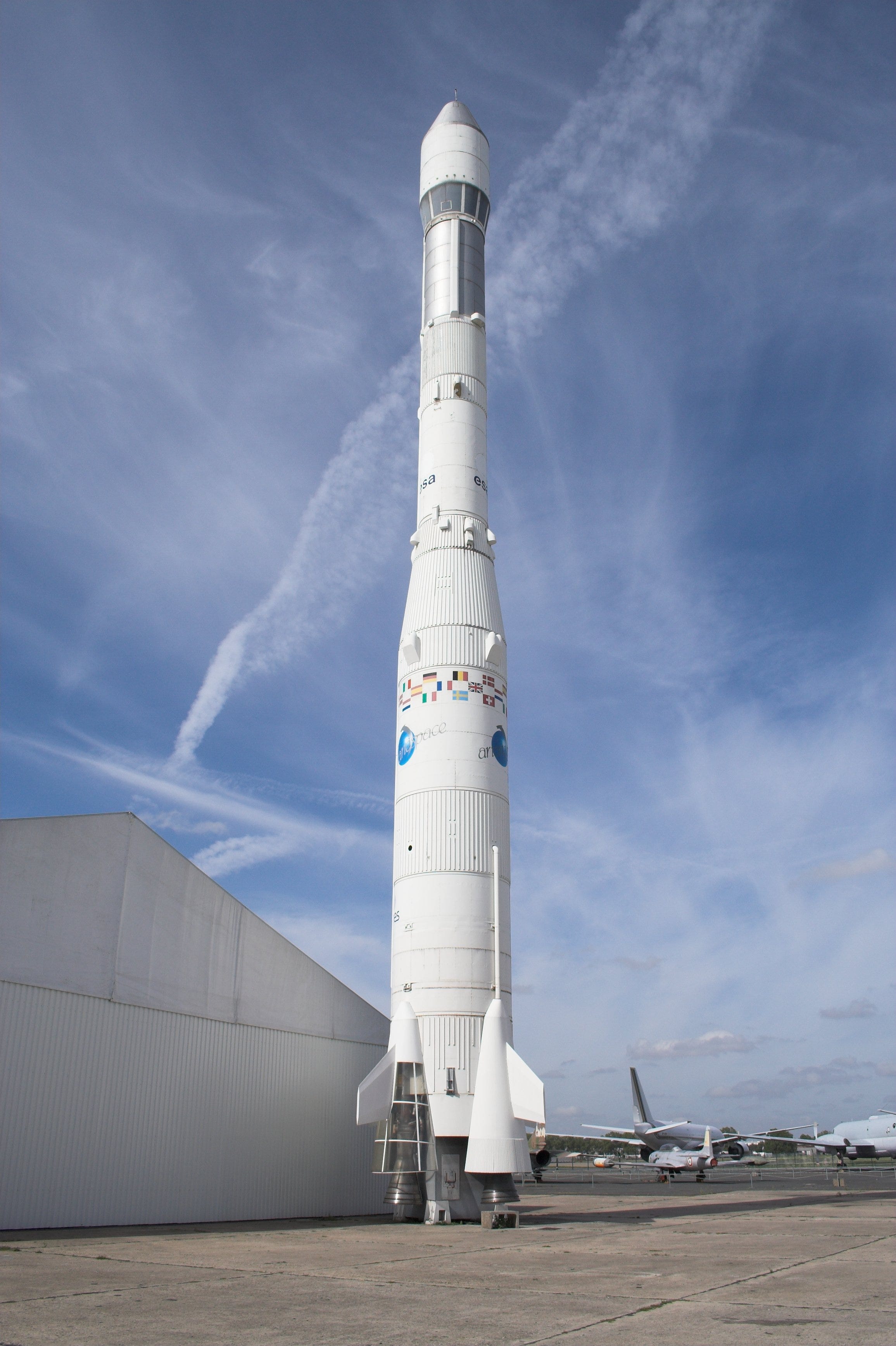
Ariane (1979)
The European Space Agency entered the sector with its Ariane I rocket in 1979. The Ariane family is still in use today, the latest being the Ariane 6.
SLV-3 (1980)
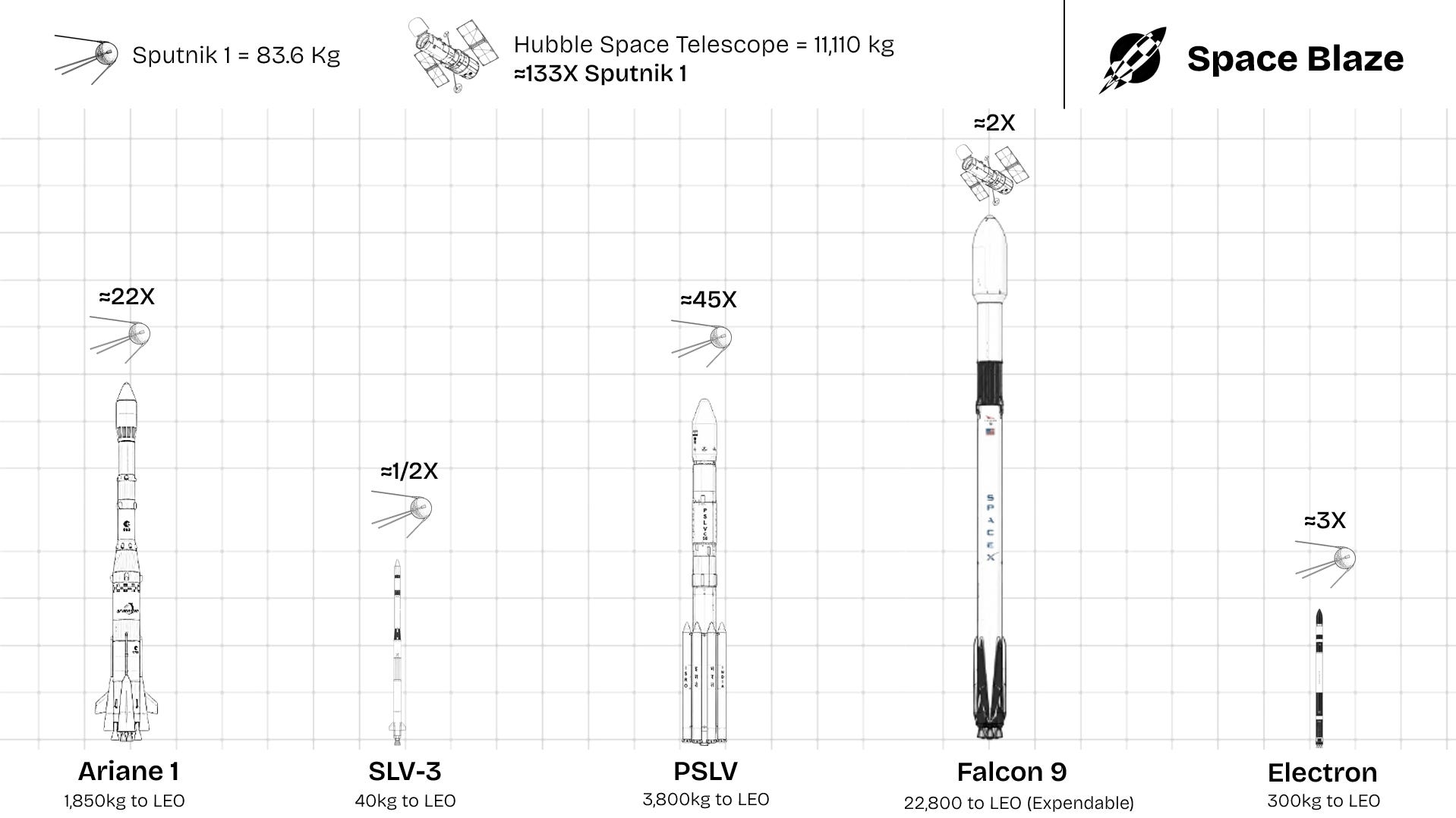
The SLV-3 was ISRO’s first experimental rocket. This tiny, solid-fueled rocket successfully placed the Rohini (RS-1) satellite into orbit, making India the 7th country to achieve independent orbital launch capability.
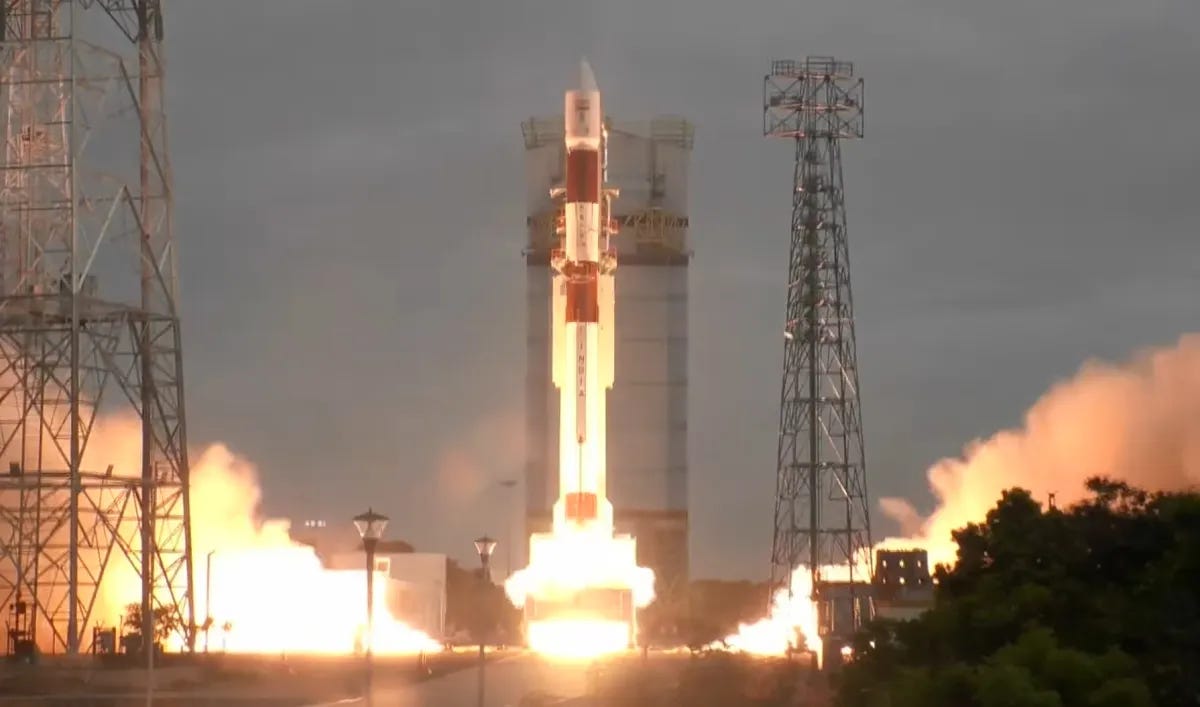
PSLV (1993)
ISRO’s Polar Satellite Launch Vehicle was first launched in 1993 and remains its workhorse rocket till today. It was highly reliable and cost-efficient. It focused on getting satellites into Low Earth Orbit (LEO).
The Modern Space Age
Falcon (2008)
Falcon 1
The Falcon 1 by SpaceX was the first privately developed liquid-fueled rocket to reach orbit. It was a tiny rocket capable of carrying only a few 100 kg to orbit.
Falcon 9
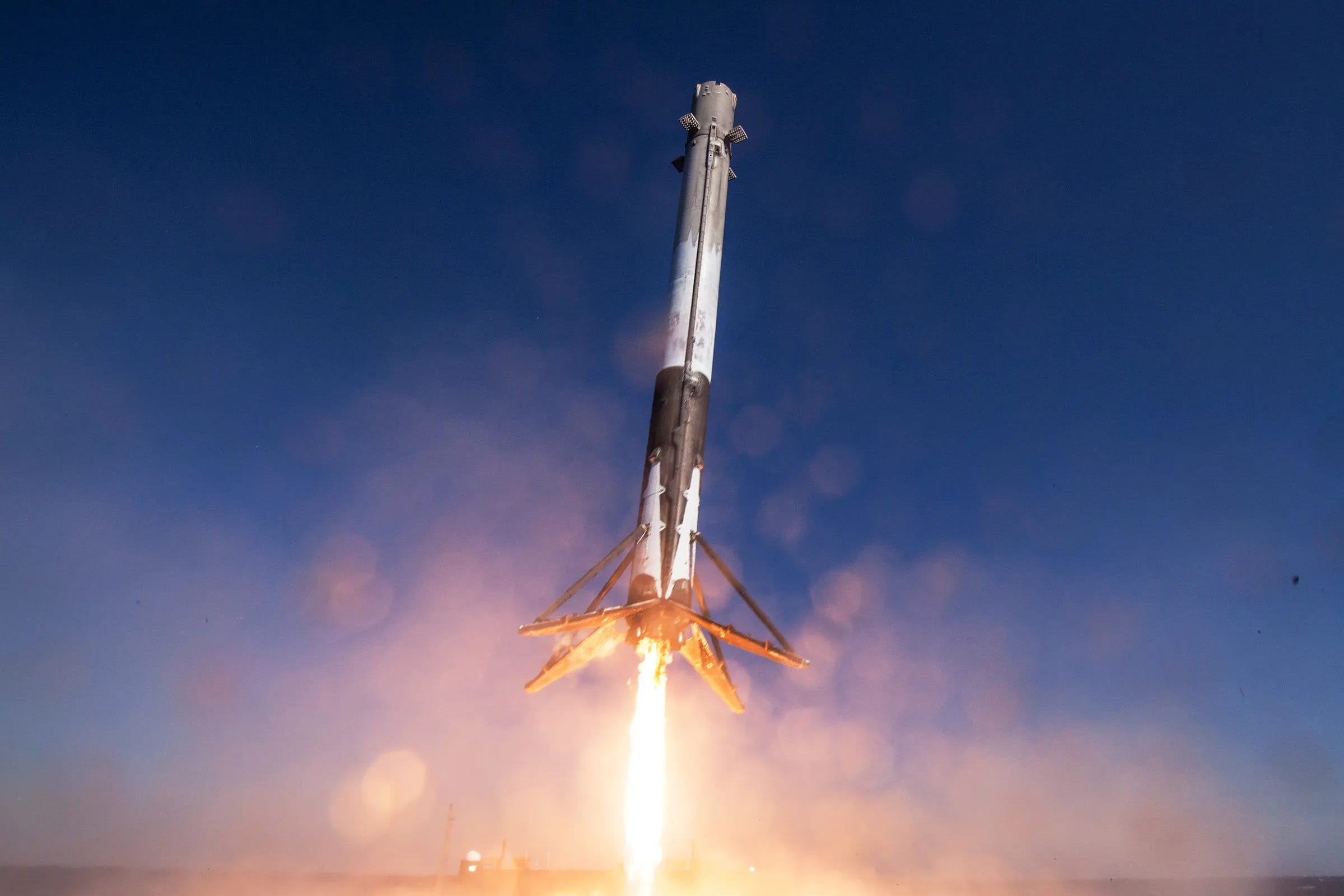
This rocket, in many ways, revolutionised the space industry. Until now, rockets were mostly single-use and extremely expensive, as a new rocket had to be built for every new launch. In 2015, SpaceX’s Falcon 9 made history by landing its first stage booster vertically back at the launchpad after a launch for reuse. While some vehicles, such as the Space Shuttle, had demonstrated reusability, the Falcon 9 made it economically viable. This rocket launches very frequently today due to its lower cost.
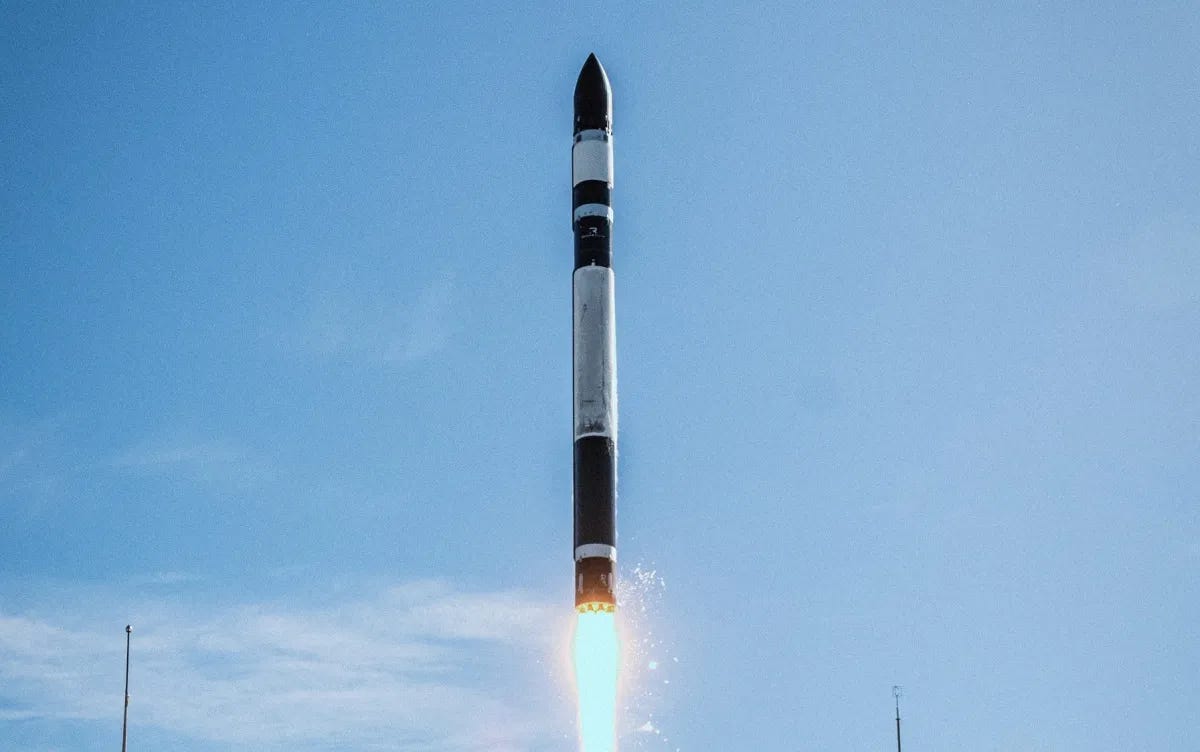
Electron (2018)
This rocket was built by another space startup, Rocket Lab. While much smaller in size compared to SpaceX’s Falcon 9, it prioritised a high frequency of launches for small satellites.
From this point, super-heavy lift rockets started to make a comeback due to advancing space ambitions like returning to the moon, getting humans on Mars and building long-term bases on other planets.
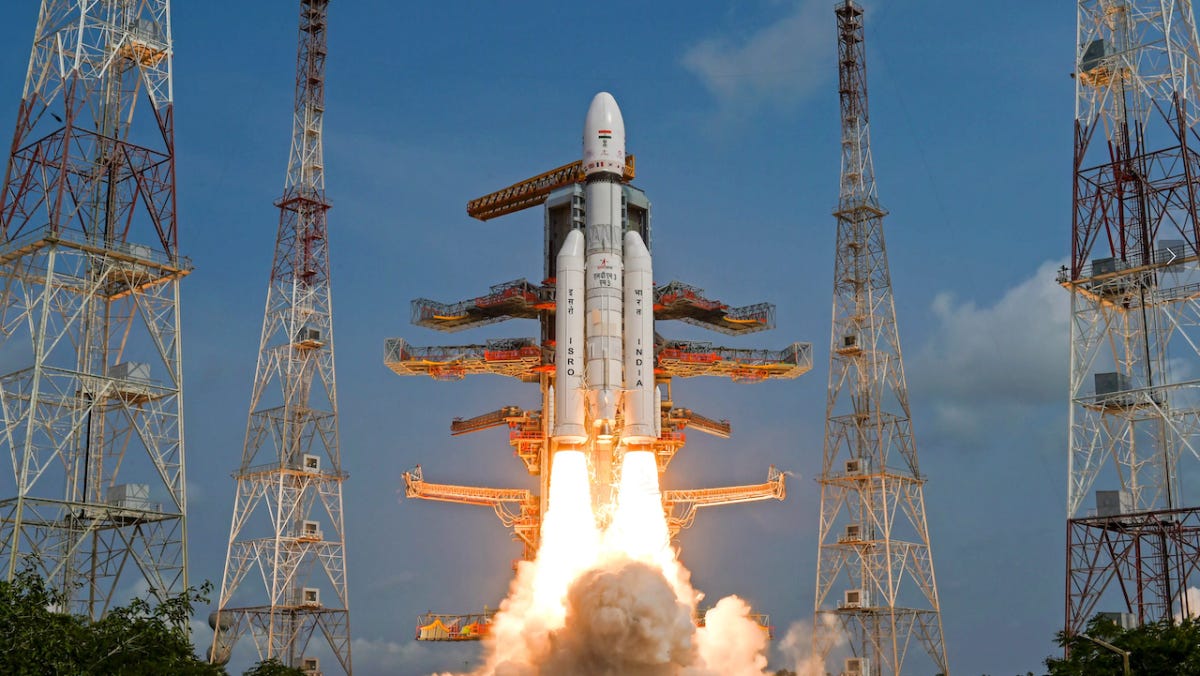
LVM3 (2017)
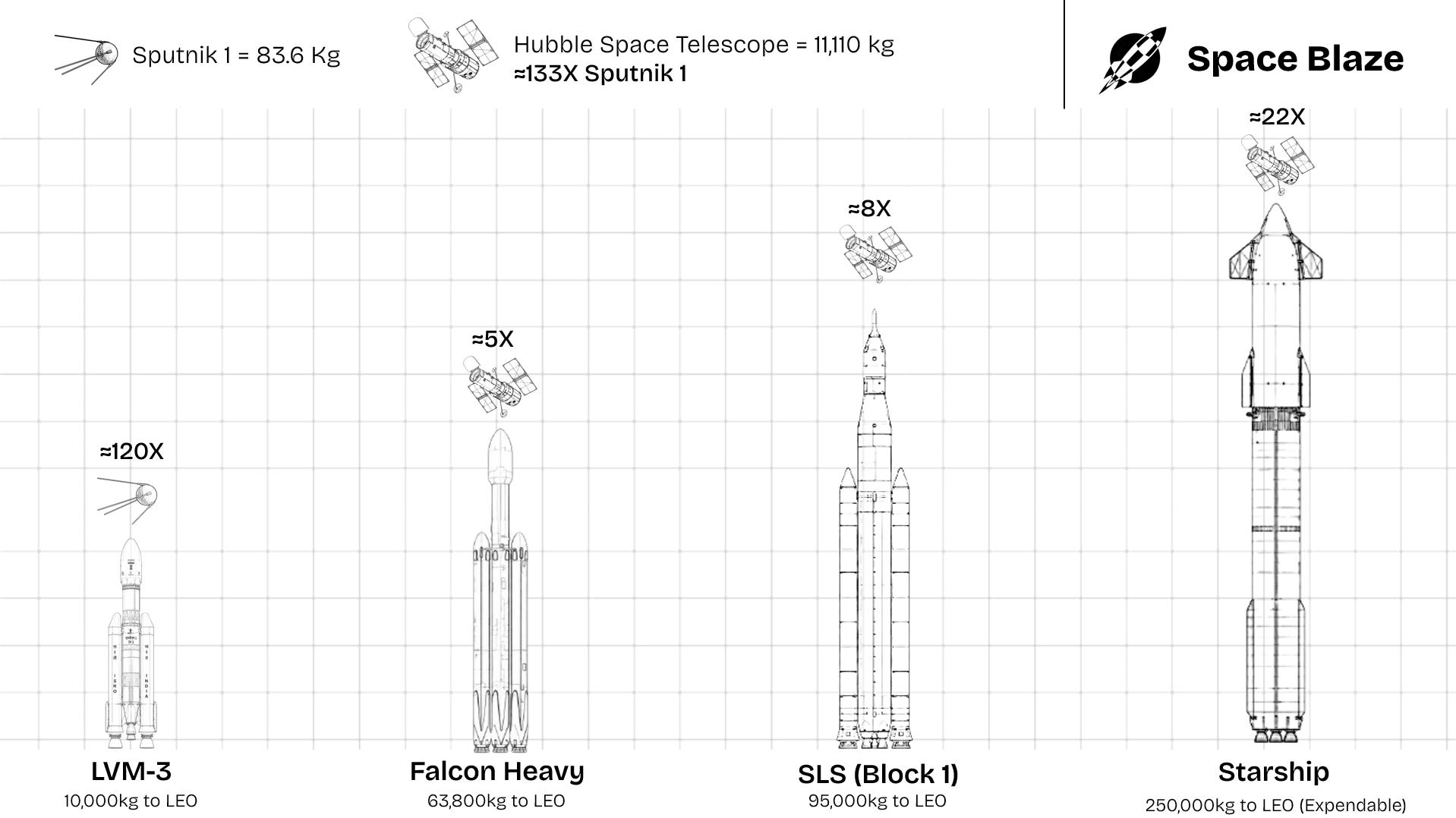
ISRO’s heavy lift rocket LVM3 (previously known as GSLV MkIII) was built for its Chandrayaan moon missions. It successfully launched Chandrayaan-2 (2019) and Chandrayaan-3 (2023) missions to the moon, and is planned to be used for India’s Gaganyaan missions for crewed orbital flights.
Falcon Heavy (2018)
This rocket by SpaceX was the most powerful rocket ever flown after the Saturn V at the time. It was made of 3 Falcon 9 core stages strapped together, one as a core stage and the other 2 as boosters on the side. Unlike previous heavy lift rockets, the Falcon Heavy’s boosters (and sometimes the core stage itself) could land synchronously back on the ground after launch, making them reusable and the whole rocket launch significantly cheaper.
SLS (2022)
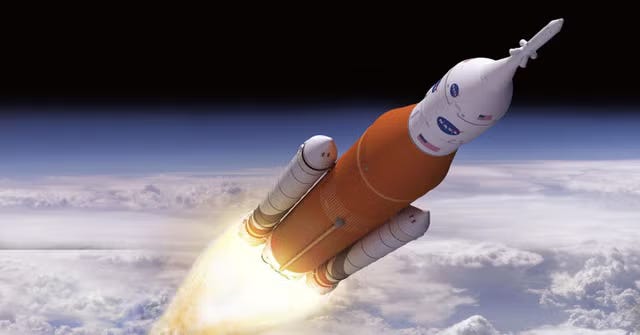
The Space Launch System (SLS) was built by NASA for the Artemis program, which aims to return humans to the Moon 50 years after Apollo. It was the first rocket in decades to surpass the Saturn V in raw liftoff thrust, though it has a much lower payload capacity. The SLS is also more expensive than the Saturn V and is not reusable at all.
In many ways, the SLS may seem like a step backwards compared to the Saturn V. But this is not because NASA forgot how to build powerful rockets. Much of the infrastructure needed to manufacture a rocket like the Saturn V — including the factories and suppliers — no longer exists. Since NASA once again needed a Moon rocket quickly, it chose to reuse Space Shuttle-era hardware instead of rebuilding that entire industrial base.
Upcoming
Starship
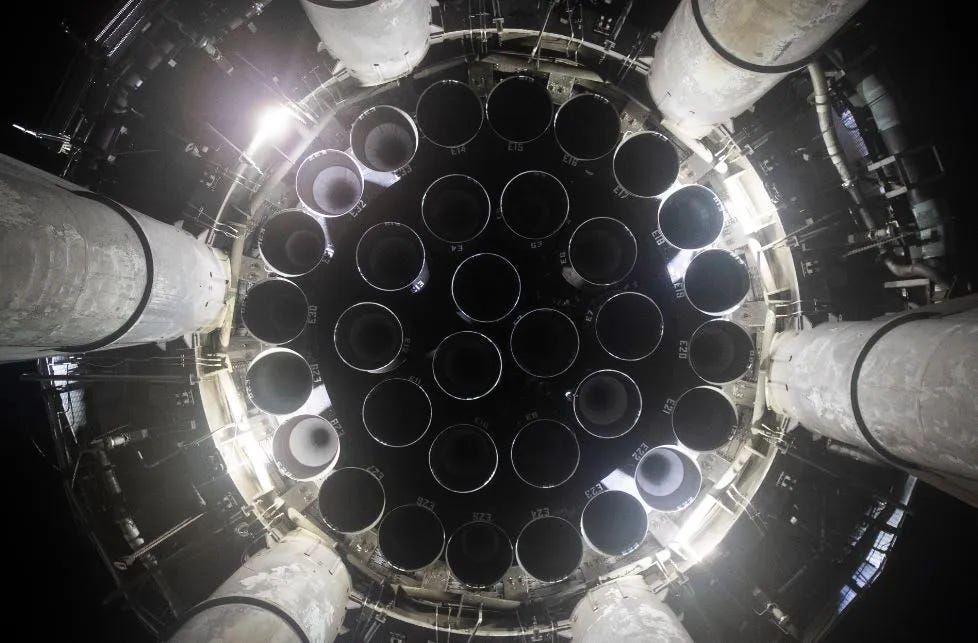
At last, we come to the largest and most powerful rocket ever built in history. This colossal rocket by SpaceX is designed to be more than twice as powerful as the Saturn V. Besides its raw power, it is expected to be fully reusable, including the upper stages. Its first stage, called ‘Super Heavy’, has 33 massive Raptor engines that run on liquid oxygen and methane, which is cleaner than kerosene and potentially producible on Mars. Recently, during its 5th test flight, SpaceX managed to catch the rocket’s first stage in mid-air using the chopstick-like arms on the launch tower after a successful launch. Starship is intended for future missions to the Moon, Mars and more.
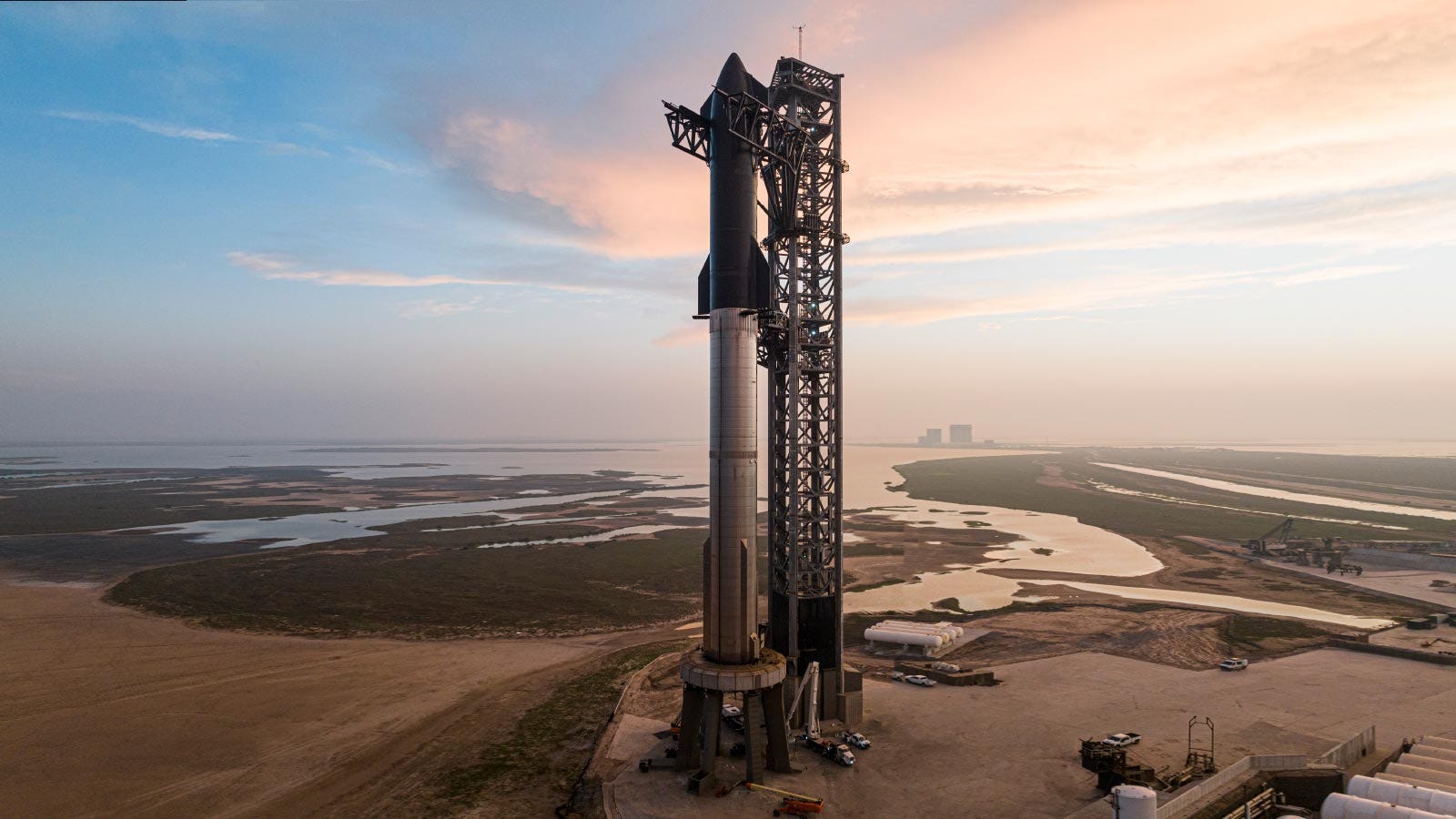
A single Starship rocket, the size of a 40-storey building (the very same we talked about at the beginning of this article), can produce over 75 Meganewtons of thrust during liftoff and should be able to carry about 150 tons of payload into Low Earth Orbit while being reusable. For comparison, Saturn V, a fully expendable rocket, could produce only 35 Meganewtons of thrust and carry 140 tons to LEO. If reusability isn’t a constraint, Starship could, in theory, launch about 250 tons of payload to LEO.
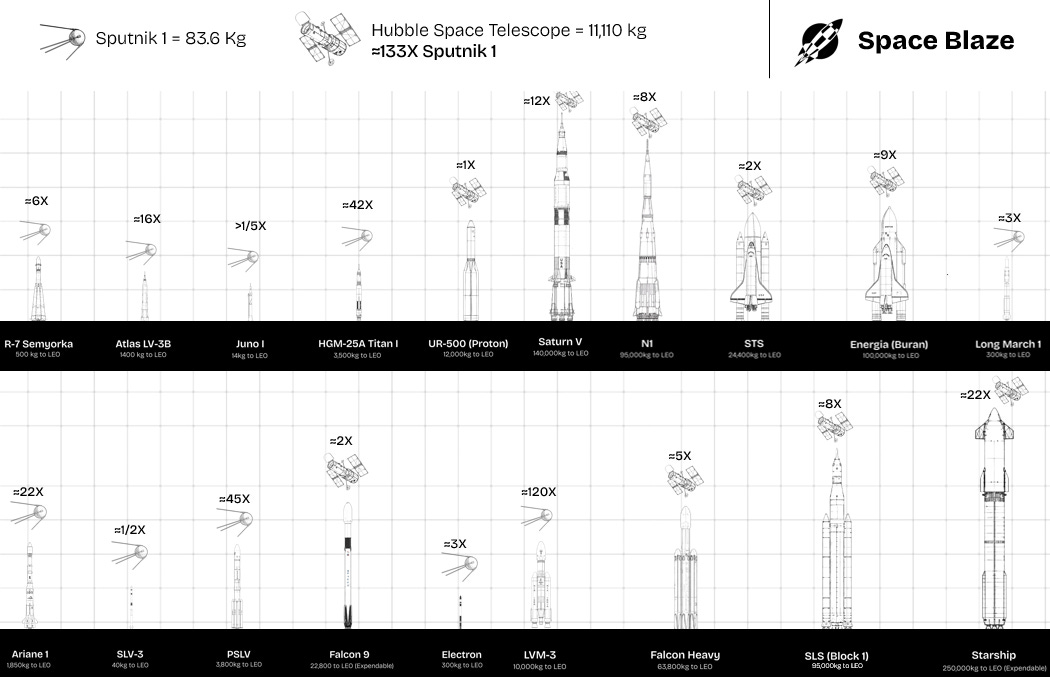
It is fascinating how the age of rockets began with a tiny rocket that could barely produce 90 newtons of thrust, and how 100 years later, we have rockets that produce thousands of times that amount and have brought everything from interplanetary bases to deep space missions within reach.