
A bomb placed at the Earth’s core would need more than 370 billion times the world’s annual energy consumption (2.2×10³² Joules) to blow the planet apart completely. This is called Earth’s Gravitational Binding Energy (GBE). Yet, stars and stellar remnants across the universe routinely release many multiples of that energy — some in a single explosion, others concentrated into jets or waves that ripple across spacetime. Even these staggering amounts of energy are dwarfed by some of the most violent and energetic phenomena in the universe. Let’s start on the lower end of the scale.
Novae
Novae usually occur in a binary star system where two stars orbit each other. A white dwarf begins pulling (accreting) hydrogen-rich gas from its nearby star, building up a superdense layer on its surface. Under extreme pressure, this gas suddenly ignites, sending fusion out of control and triggering a huge explosion. A nova can release anywhere between 50,000 and 500,000 times Earth’s gravitational binding energy over days to weeks. Yet somehow, the star survives. And if an explosion powerful enough to dwarf anything humanity has ever produced can’t even destroy a star, things only get bigger from here.
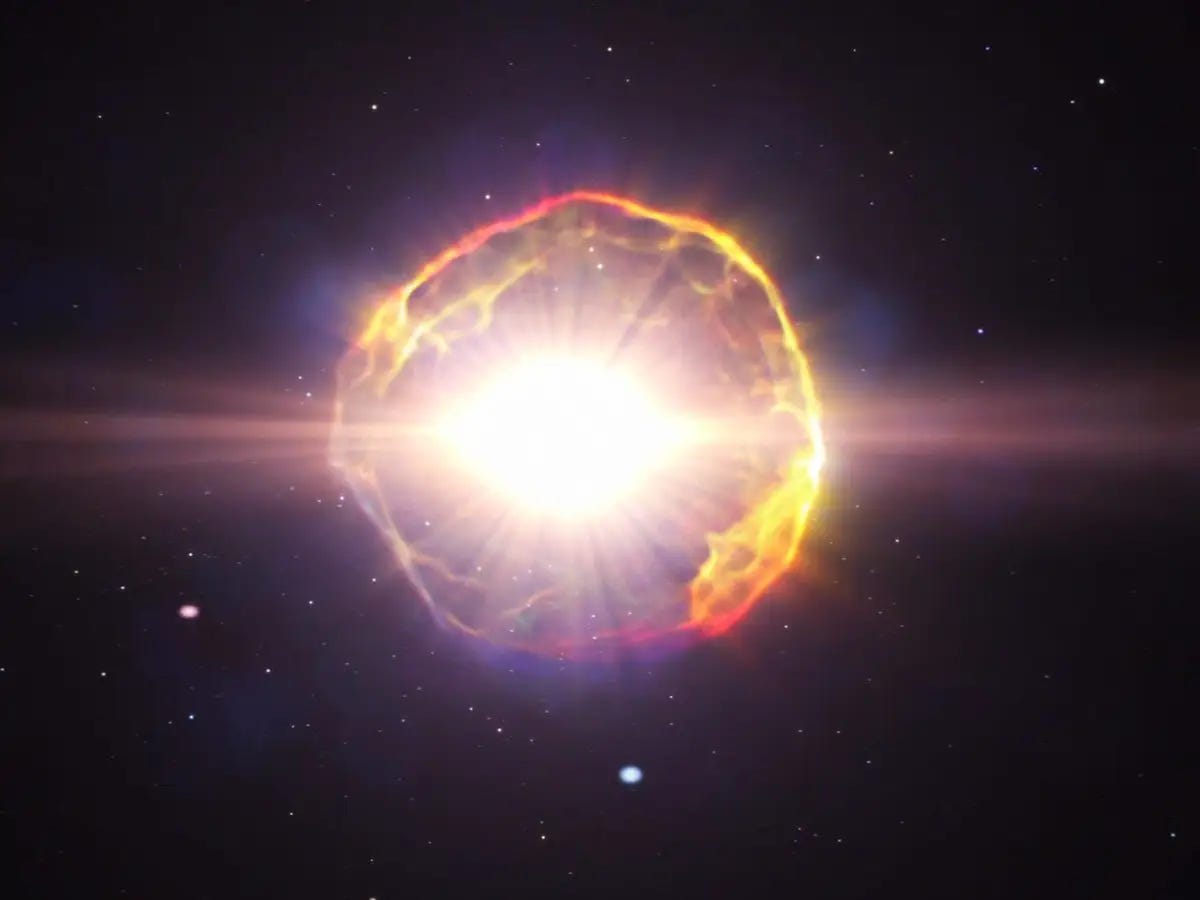
Supernovae
A supernova occurs when a massive star loses its ability to sustain further fusion and collapses in on itself, unleashing an enormous burst of energy that blasts the star’s outer layers into space as ejecta. This is a Type II supernova, and the ejecta alone can carry more kinetic energy than a nova by a factor of a million or more. But that’s not even where most of the energy goes. Nearly 100 times that amount is carried away by neutrinos — particles created during the star’s collapse that escape into space at nearly the speed of light.
There’s also a second kind of supernova. A white dwarf in a binary system, as described in the novae section, can accrete enough gas from its nearby star to be destroyed entirely rather than merely triggering a surface explosion. This is a Type Ia supernova.
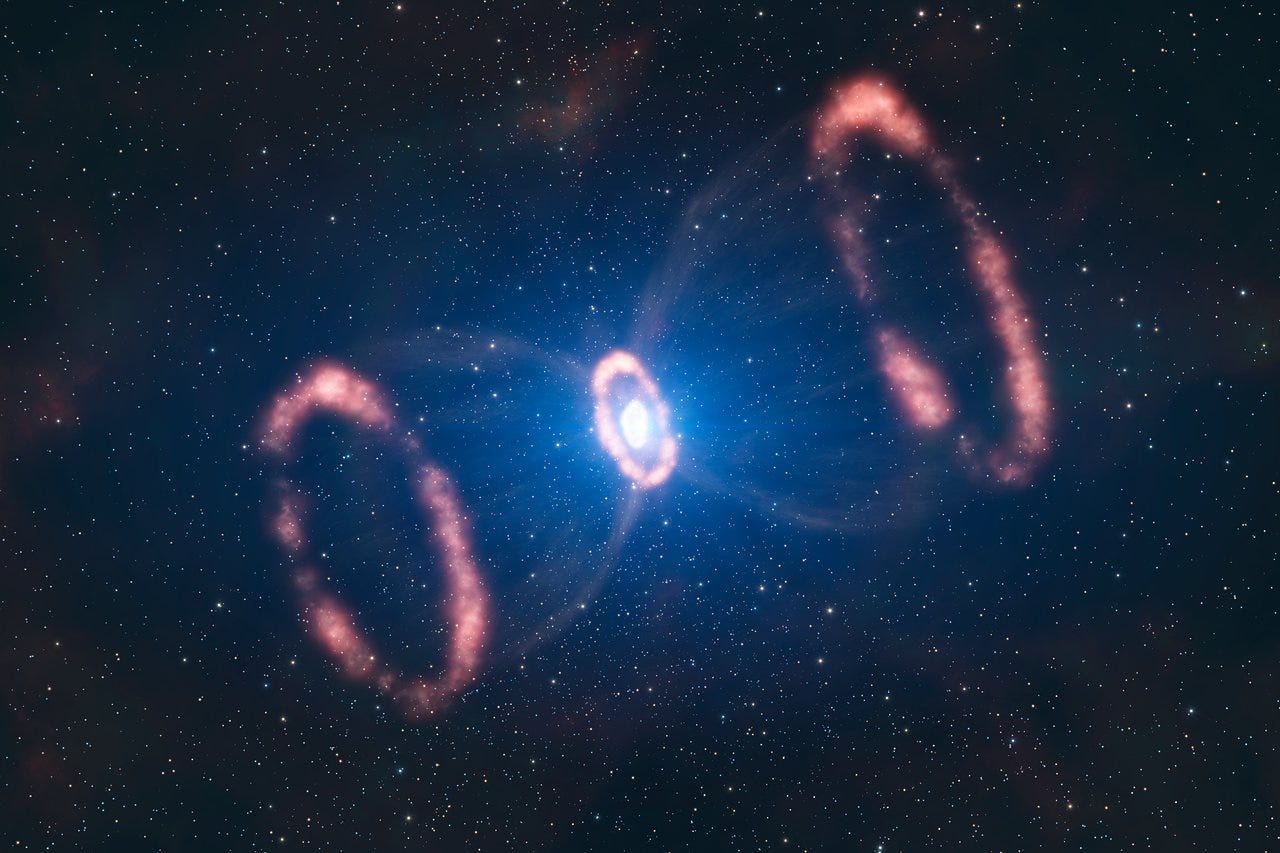
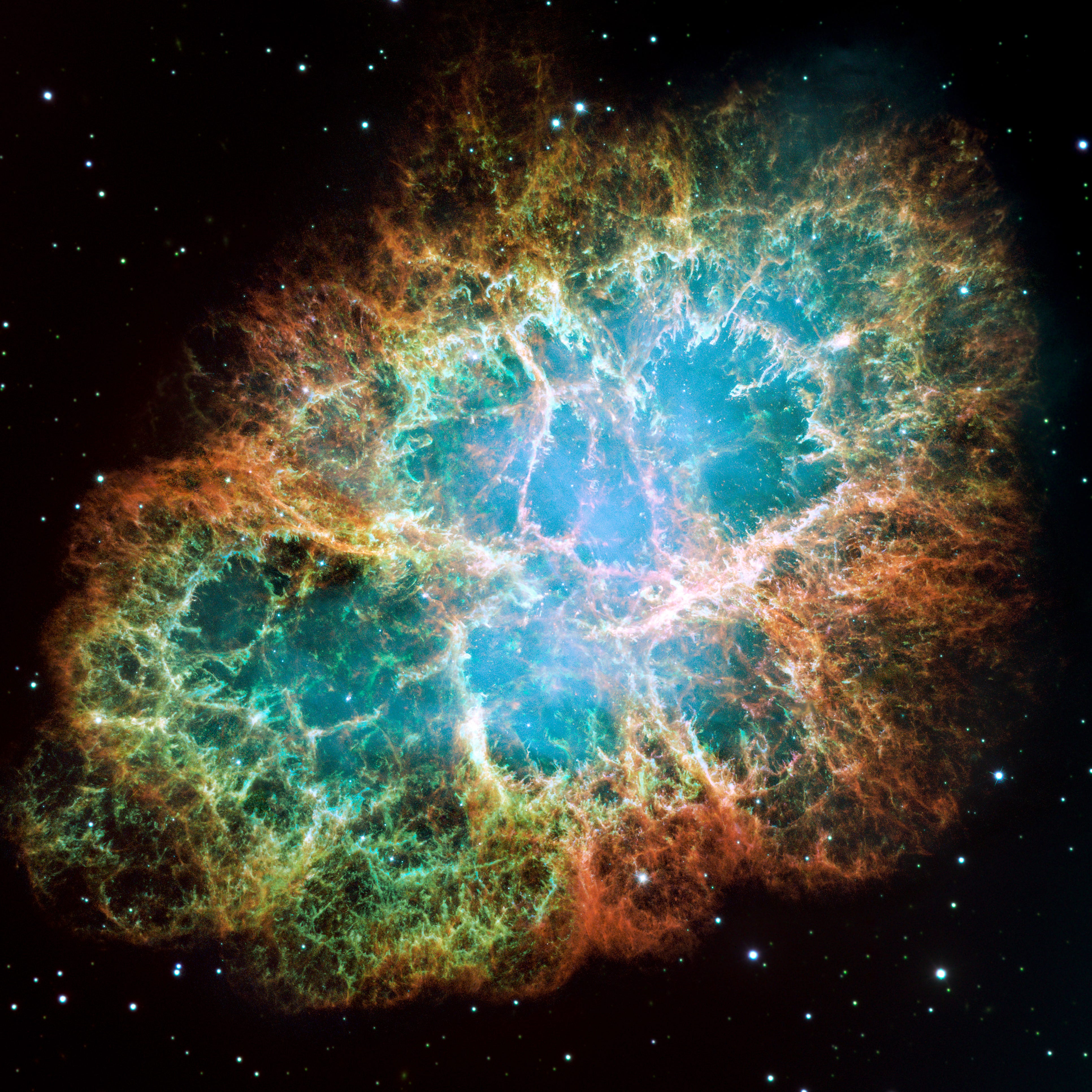
A supernova can be extremely destructive, but when such huge amounts of energy are focused into one concentrated jet, things get scary.
Gamma Ray Bursts
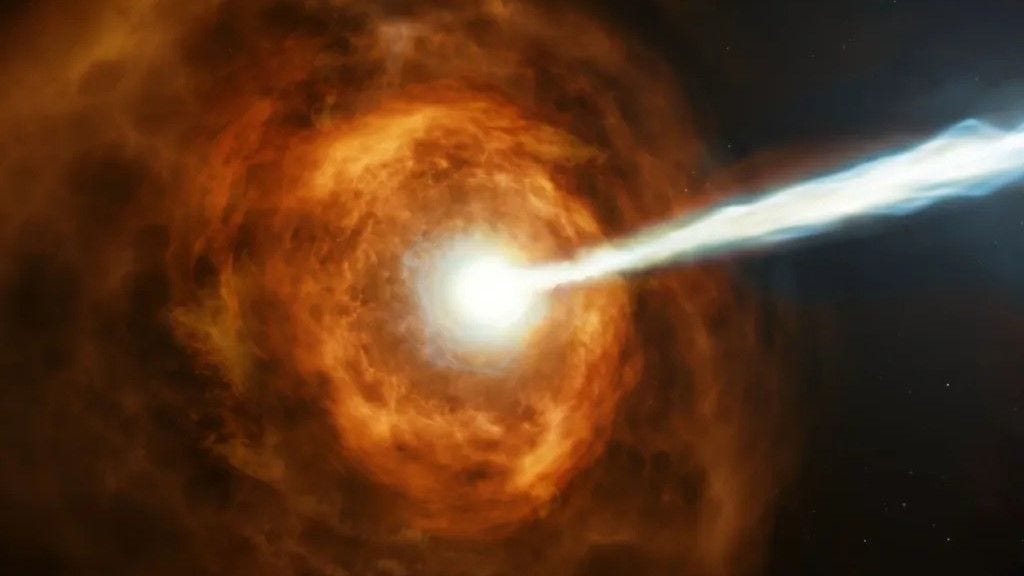
Gamma Ray Bursts, or GRBs, are extremely brief events that unleash highly concentrated jets of relativistic particles travelling at over 99.99% the speed of light. They have about the same amount of energy as a supernova, but pack it into a narrow jet within seconds. If we were to consider the same energy to be released equally in all directions, it would be a significantly larger number called the isotropic equivalent.
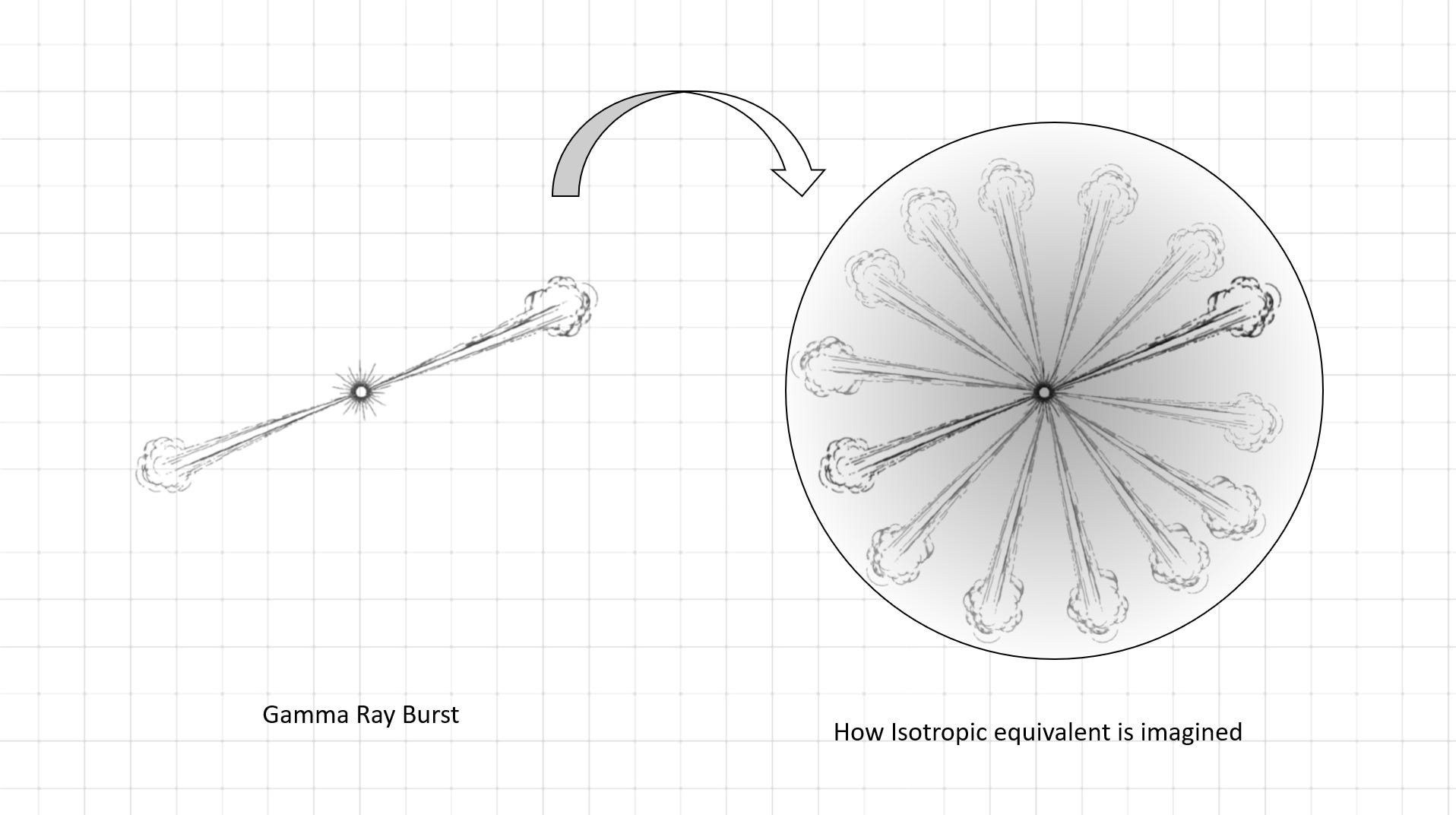
Long GRBs last more than about 2 seconds and are usually caused by massive stars collapsing to form a black hole. Short GRBs last less than about 2 seconds and are usually caused by mergers of neutron stars and black holes.
From this point, phenomena get so extreme that they no longer release energy as explosions or even jets, but as gravitational waves.
Neutron Star Mergers
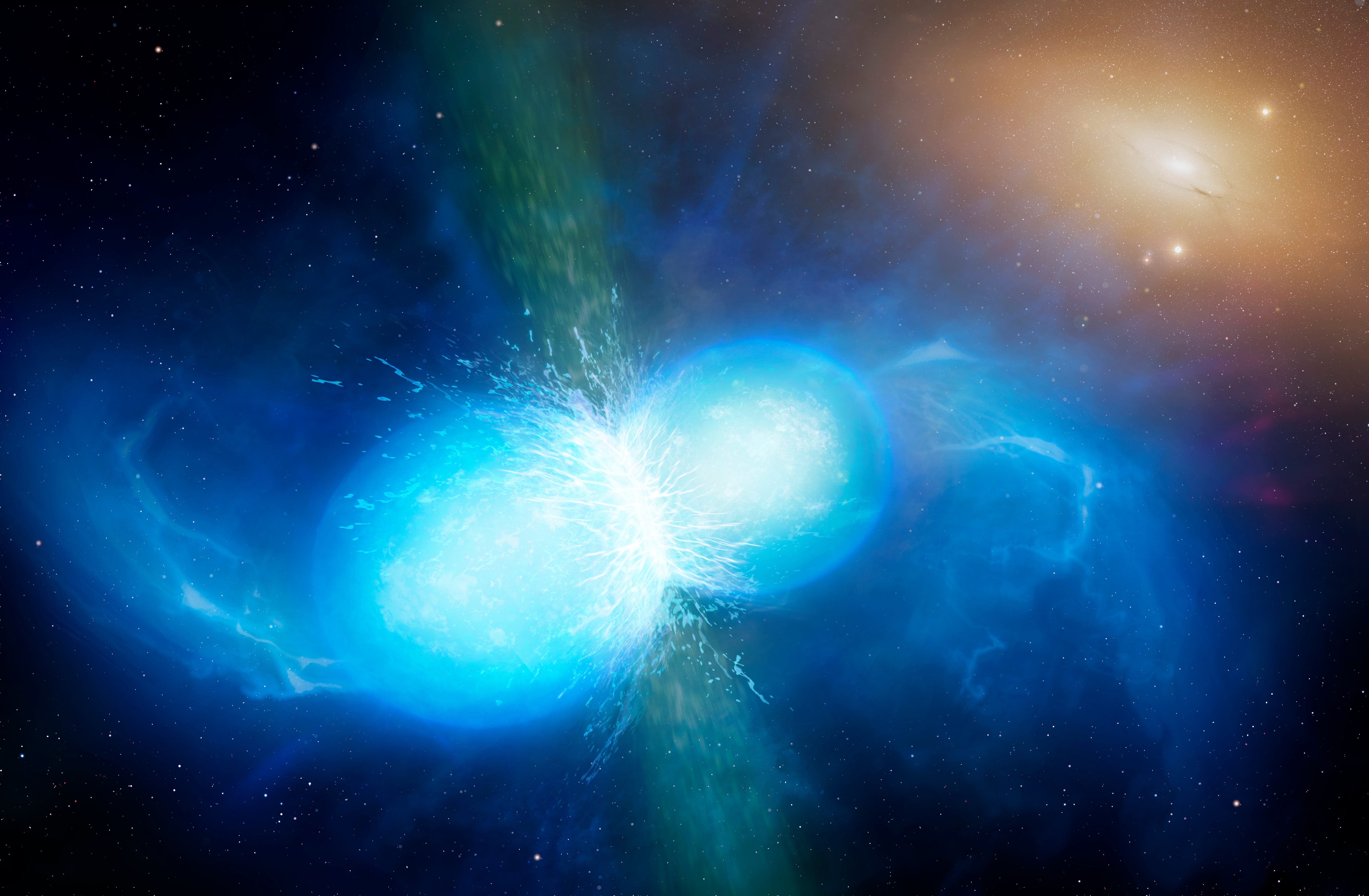
Neutron stars are ultra-dense leftover cores of stars after they have exploded as supernovae. They are denser than anything in the universe except black holes themselves. They pack more mass than the Sun into a sphere only about 20 km wide. When two neutron stars collide, they either form a black hole or a single massive neutron star. These events are so violent that they cause ripples in spacetime as gravitational waves. They’re a consequence of Einstein’s general theory of relativity, but we’ll leave the spacetime rabbit hole for another day.
These collisions can pack 20 times the energy of a supernova unleashed in seconds. The debris from neutron star collisions is so neutron-rich that it forges new elements including gold and platinum — releasing a glow called a kilonova along the way. The one such merger ever directly observed, GW170817 in 2017, is estimated to have produced several Earth masses of these heavy elements.
And yet even neutron star mergers are not the most powerful phenomena we have observed.
Black Hole Mergers
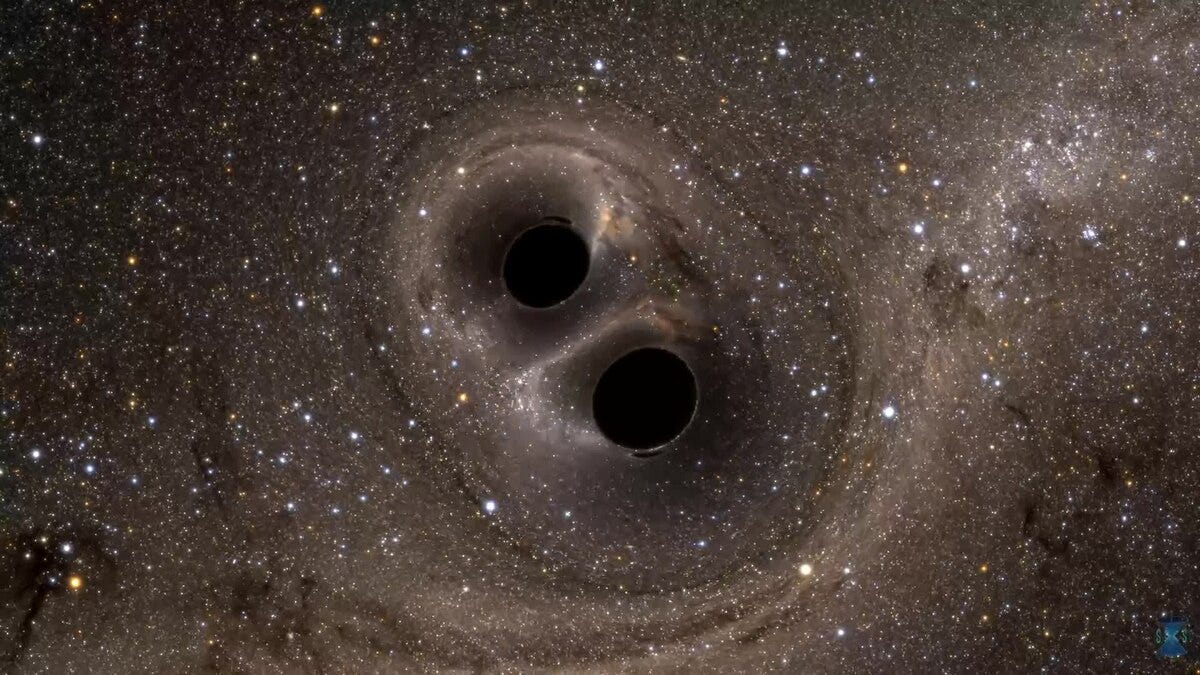
Two black holes spiralling towards each other end the only way they can — they merge to form a single massive black hole, and in the process, they too release massive amounts of energy as gravitational waves, but often tens of times more than a neutron star merger.
As we come to the end of this article, there's one more side to this violence we've overlooked. With destruction comes creation. The matter ejected by a supernova also gives rise to new stars and planets like ours. Forces capable of releasing energies that dwarf the destruction of an entire planet are the same reason we're here today.